
09 Feb Choosing Between MgO Board and Drywall for Modern Projects
If you want the best results for new projects, you should pick mgo board. This material is special because it gives better fire safety, keeps out water, and lasts longer. You get something that will not burn, will not bend, and stays strong even in hard places. The most important things to think about are:
Fire resistance
Moisture resistance
Durability
Installation costs
Environmental impact
Each of these points can help you choose what works best for you.
Key Takeaways
MgO board is much better at stopping fire. It can last up to 4 hours in a fire. This makes it safer than drywall.
Moisture resistance is very important. MgO board only takes in 0.34% water. Drywall can take in much more water. This can cause mold to grow.
Pick MgO board if you want something strong. It can handle hits and tough weather better than drywall. This means you will spend less on repairs over time.
Think about the environment too. MgO board is better for the earth. It uses less energy and makes less pollution when made.
MgO board costs more at first. But it is worth it in the long run. It keeps you safer and lasts longer.
MgO Board vs Drywall Overview
MgO board and drywall are not the same. Both are used for walls and ceilings. They do their jobs in different ways. You should learn about each one before you pick.
What Is Magnesium Oxide Board?
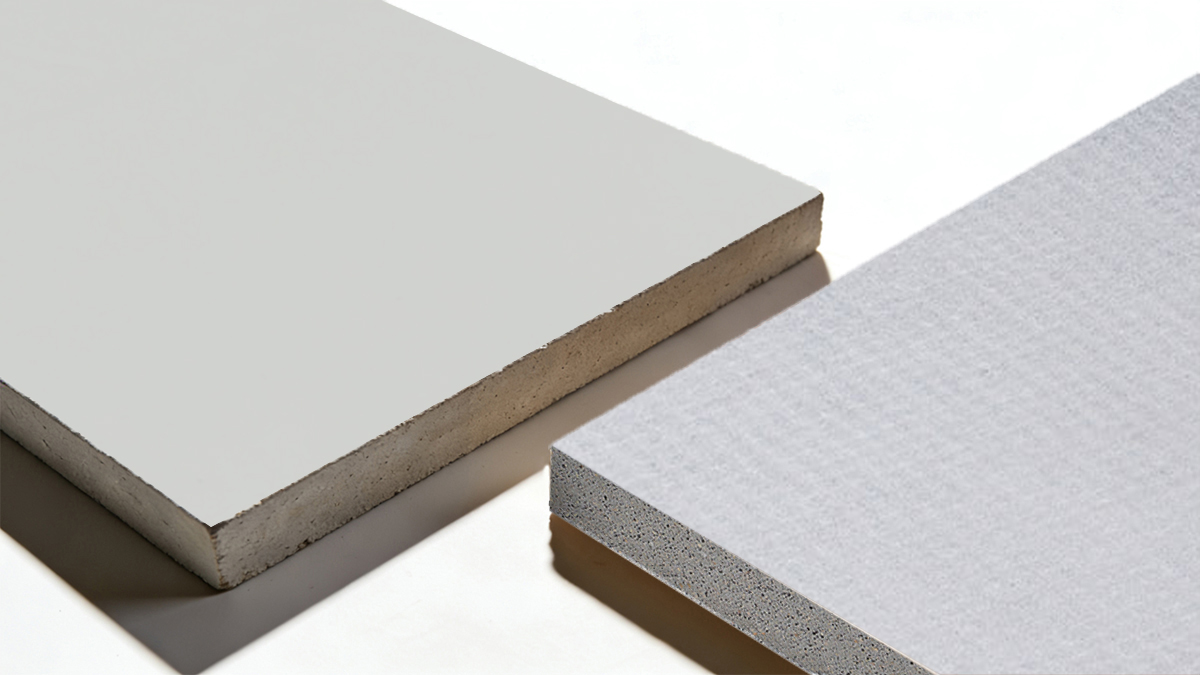
MgO board is made from magnesium oxide, magnesium sulfate, and other natural things. Fiberglass mesh is added to make it stronger. This board can handle fire, water, and hits. It is good for places that need more safety or strength. MgO board does not burn or soak up water. It stays strong in wet or hot spots. It also does not put bad chemicals in the air.
What Is Drywall?
Drywall is also called gypsum board. It is made from gypsum pressed between two paper sheets. Most homes and offices use drywall. It is simple to cut and put up. Drywall is best for rooms that stay dry. It does not do well with water or fire. If drywall gets wet, it can break or grow mold. Drywall can also burn if it gets too hot.
When you look at MgO board and drywall, you see they work differently. The table below shows some main features:
Feature | MgO Board | Drywall |
|---|---|---|
Fire Resistance | Non-combustible, zero flame spread | Combustible, can contribute to fire spread |
Water Resistance | Does not absorb water | Absorbs water, can degrade in humidity |
Durability | More impact-resistant, durable | Less durable, can tear easily |
Composition | Made from magnesium oxide and sulfate | Made from gypsum and paper |
Environmental Impact | Fewer emissions in production | Higher emissions in production |
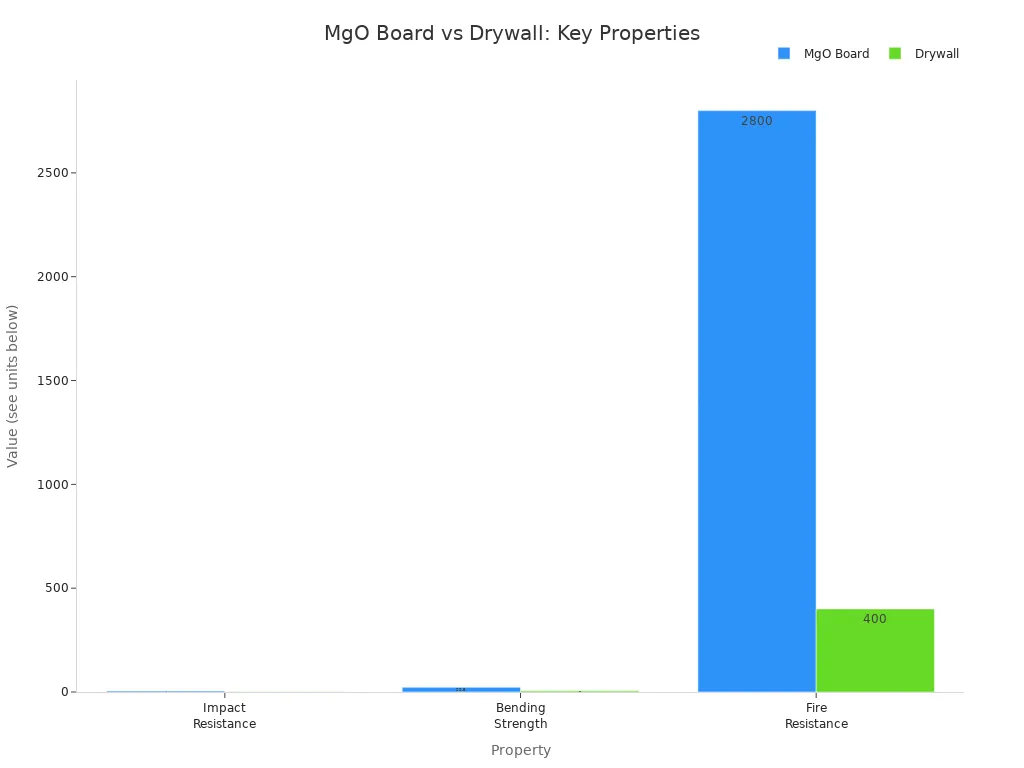
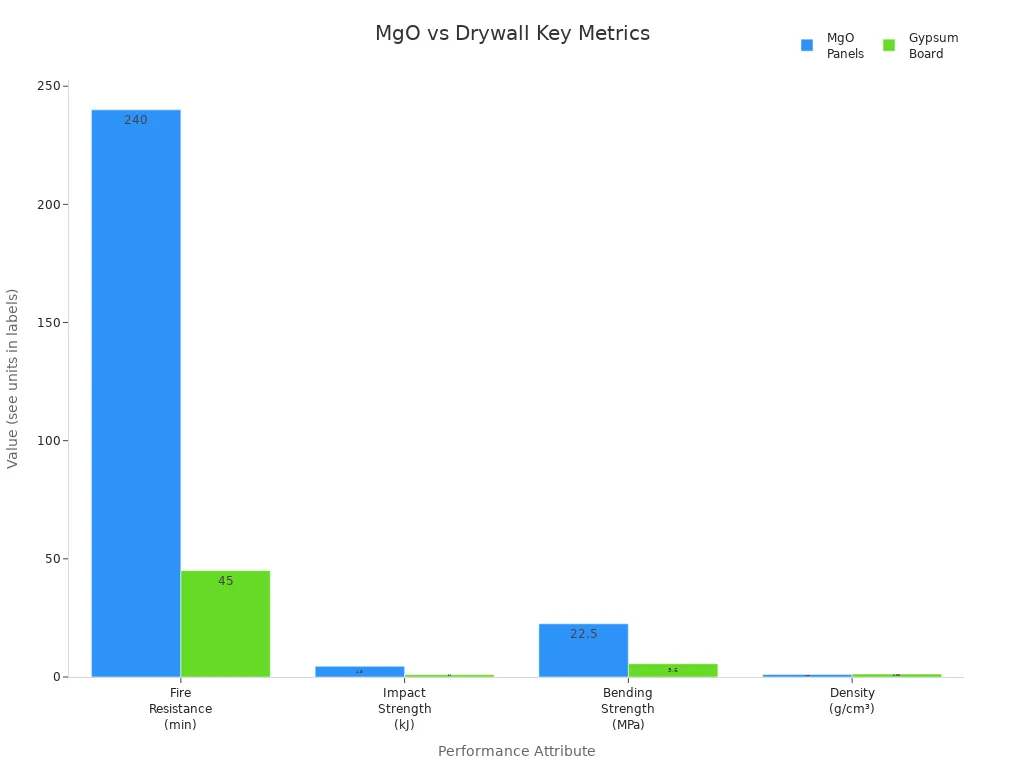
You can see that MgO board is stronger and safer. The chart below shows that MgO board has better impact resistance, bending strength, and fire resistance.
Think about where you want to use the board. MgO board is best for places that need more protection. Drywall is fine for rooms that do not get wet or hot. The best choice depends on what you need. Knowing the differences helps you pick the right one.
Head-to-Head Comparison: Performance
MgO board and drywall do not work the same. They are very different in fire safety, moisture resistance, and strength. This comparison helps you see which one is better for your project.
Fire Resistance
Fire safety is very important when picking a board. MgO board is much safer in a fire than drywall. MgO board can take heat up to 750°C and will not burn. It can last up to 4 hours in a fire. This gives you more time to get out and keeps your building safer. Drywall gets weak after only 20-30 minutes at 400°C. It cannot protect you as long if there is a fire.
Here is a table that shows how each board handles fire:
Material | Maximum Temperature Resistance | Fire Resistance Rating |
|---|---|---|
MgO Boards | Up to 1200°C (2192°F) | Up to 4 hours |
Gypsum Drywall | Fails at 400°C (752°F) | 30-60 minutes |
MgO board also keeps the air cleaner during a fire. It does not make much smoke or let out bad fumes. This makes it safer for people to escape. Drywall can make smoke and harmful gases. This can make it harder to get out safely. Fire safety is a big part of performance, and MgO board is better here.
Moisture Resistance
Moisture resistance is another big difference. Drywall can soak up water and break if it gets wet. Gypsum boards can take in up to 3% water. When wet, they may drip water and even grow mold. This makes the board weak and can cause health problems.
MgO board only takes in 0.34% water. In tests, MgO board stayed dry after 24 hours. It stays strong even in damp places. The table below shows how each board deals with water:
Material | Water Resistance | Structural Integrity under Moisture |
|---|---|---|
MgO Board | Highly resistant | Maintains integrity |
Drywall | Not water-resistant | Deteriorates under moisture |
You can use MgO board in bathrooms, kitchens, and basements. It does not lose strength or break down. Moisture resistance is important, and MgO board is the winner.
Durability and Strength
Durability and strength help your walls last longer. MgO board is much stronger than drywall. It can take hits and heavy things without breaking. Even after high heat, MgO board keeps its strength above 5KJ/m². This means it does not get weak in tough spots or fires.
Here is a table that shows how strong each board is:
Property | MgO Boards | Drywall |
|---|---|---|
Load-Bearing Capacity | High compressive and tensile strength | Lower strength, not for heavy loads |
Resistance to Physical Damage | Excellent impact resistance; does not crack or dent easily | Easily damaged, prone to dents and cracks |
MgO board can handle bumps and heavy use. Drywall can tear, dent, or crack more easily. This makes MgO board better for places that need strong walls.
Tip: If you want walls that last and need less fixing, pick MgO board for better strength and durability.
In this comparison, MgO board is better than drywall in fire safety, moisture resistance, and strength. You get safer, stronger, and longer-lasting walls. This is why MgO board is the best choice for modern projects where you need good performance.
Environmental Impact
 Sustainability
 Sustainability
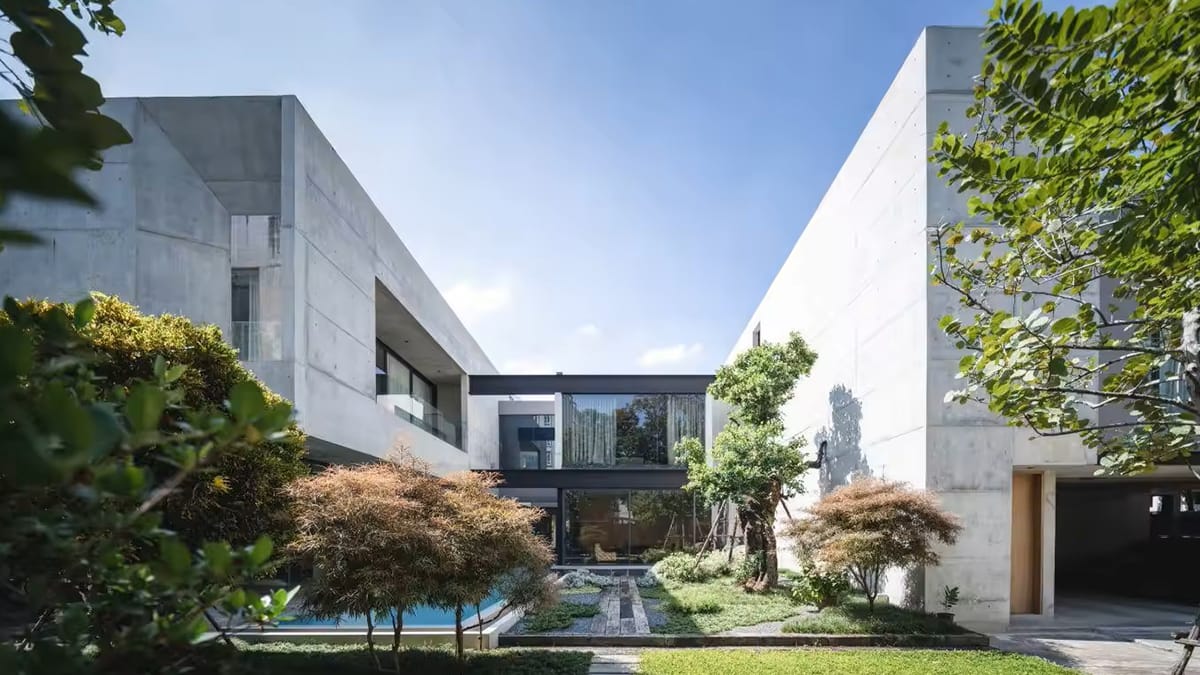
It is good to pick materials that help the earth. MgO board is better for the planet because it uses less energy. Making MgO board needs only about half the energy of drywall. MgO board also takes CO2 out of the air during curing. For every ton made, it removes 0.5 tons of CO2. Magnesium oxide gives off 340 kg of CO2 per ton. Gypsum gives off 740 kg for each ton. MgO boards come from natural places or seawater. This means you do not need heavy mining. MgO board is a smart choice for green buildings.
MgO board uses less energy to make.
The process takes CO2 out of the air.
Raw materials come from cleaner places.
VOCs & Air Quality
Clean air inside is important for your health. MgO board does not let out bad gases or toxins. It stops mold and mildew, so your air stays clean. Drywall can let out chemicals and may grow mold if it gets wet. This can make people sick, especially those with allergies.
Feature | MgO Board (MagPanel®) | Drywall |
|---|---|---|
Mold and Mildew Resistance | High (antimicrobial) | Low (prone to moisture) |
Toxic Materials | None | May contain harmful substances |
Off-gassing | None | Possible |
Environmental Impact | Recyclable, landfill friendly | Not specified |
Energy Consumption | Lower | Not specified |
Note: Hospitals and schools use MgO board for cleaner air.
Recyclability
You might wonder what happens to old boards. MgO board is easy to recycle and reuse. You can make new things from it. Drywall is harder to recycle and often becomes trash. About 30% of drywall gets wasted when recycling because it is dirty.
Material | Recycling Opportunities | Recycling Challenges |
|---|---|---|
MgO Boards | Easy to recycle; can be reused for new materials | N/A |
Gypsum Boards | N/A | Difficult to recycle; contamination issues; 30% waste generated during recycling |
Picking MgO board helps the earth and keeps people healthy.
Cost & Installation
Upfront Cost
When you look at the cost comparison between MgO board and drywall, you will notice a big difference. Drywall is cheaper to buy. The price for drywall ranges from $0.40 to $0.50 per square foot. If you add labor, the total cost goes up to $1.50 to $4.00 per square foot. MgO board costs more. You will pay between $1.50 and $3.00 per square foot, with some brands costing $0.93 to $2.16. On average, MgO board costs $2.10 to $2.50 per square foot.
Material | |
|---|---|
Drywall | $0.40 to $0.50 |
Drywall (with labor) | $1.50 to $4.00 |
MgO Board | $1.50 to $3.00 |
MgO Board (average) | $2.10 to $2.50 |
You will also see higher installation costs for MgO board. This is because it is heavier and needs special tools. Drywall is easier and faster to install, so labor costs less.
Long-Term Value
You might pay more for MgO board at first, but it can be more cost-effective over time. MgO board has long-term durability. It resists fire, water, mold, and pests. This means you will spend less on repairs. Over 20 years, the maintenance cost for MgO board stays low. Drywall needs more repairs because it can get damaged by water and mold. This makes the long-term cost higher for drywall.
Material | Maintenance Cost | Key Features |
|---|---|---|
MgO Boards | Low | Resistant to fire, water, mold, and pests |
Gypsum Boards | Moderate | Susceptible to water damage and mold |
MgO board lasts longer. It handles more impact and stress. You will not need to replace it as often. This long-term durability makes it a smart choice for busy areas.
Installation Ease
Installing drywall is simple. It is light and easy to cut. Most workers know how to put it up. MgO board takes more work. You must cut it exactly, use special screws, and leave small gaps for expansion. You also need to install the boards evenly. Some brands may be harder to work with.
Tip: If you want a smooth and fast job, drywall is easier. If you want long-term durability, MgO board is worth the extra effort.
Cost Factor | MgO Boards | Gypsum Boards |
|---|---|---|
Installation Cost | Higher | Lower |
MgO board can be faster to install in some cases. It makes less dust and keeps edges clean. Still, the process needs more skill and care.
Best Uses for MgO Board and Drywall
Ideal Projects for MgO Board
 Ideal Projects for MgO Board
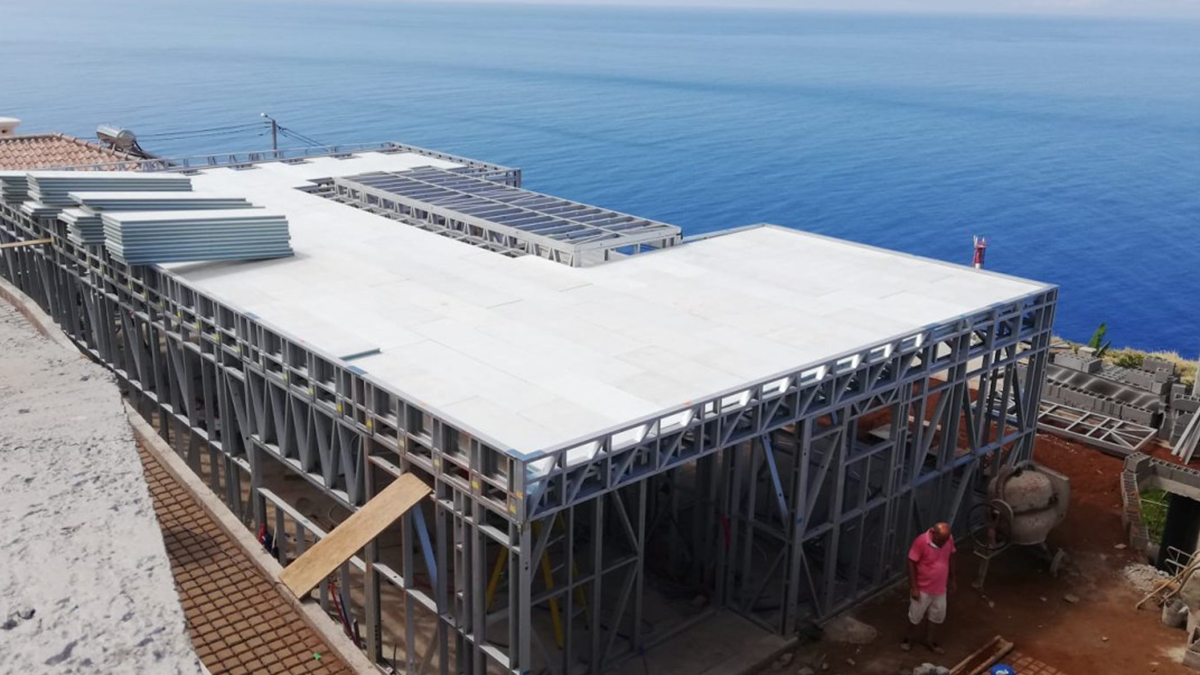
Pick magnesium oxide board when you need strong safety and long-lasting walls. This board is great in places where fire and water safety are important. If you build apartments, hotels, or schools, you want people to be safe. Magnesium oxide wallboards help stop fire from spreading. They also help you follow fire rules. These boards make rooms quieter by blocking sound.
You can use magnesium oxide board in many ways. It works for subflooring, wall sheathing, and underlayment. You can put it in kitchens, bathrooms, and basements. It does not soak up much water or grow mold. The board stays strong in wet or hot places. Your walls will last for a long time.
Here is a table that shows the main benefits:
Benefit | Description |
|---|---|
Magnesium oxide wallboards make buildings safer from fire and help meet safety rules. | |
Acoustical Performance | They keep noise down, which is good for buildings with many rooms. |
Versatile Applications | You can use them for floors, walls, and many other parts of a building. |
Magnesium oxide wallboards are also good for the earth. They use less energy and can be recycled. This means less trash goes to landfills. These boards help with green building plans. Magnesium oxide board works well in all kinds of weather. It helps you save money on heating and cooling. If you want walls that are strong, safe, and good for the planet, MgO board is the best pick.
Ideal Projects for Drywall
Drywall is a good choice when you want to save money and finish work fast. Magnesium oxide wallboards cost more, but drywall is cheaper for most walls and ceilings. You can use regular drywall in homes, offices, and stores. It works best in dry rooms where there is little water.
For kitchens and bathrooms, you can use green board. This type of drywall helps stop water damage and mold. In basements, you should use mold-resistant drywall, like purple board. This stops mold from growing. Type X drywall is fire-resistant. It is good for garages and walls that need extra safety.
Here are some common ways to use drywall:
Regular drywall is for living rooms, bedrooms, and offices.
Green board is for bathrooms and kitchens.
Mold-resistant drywall is for basements.
Type X drywall is for garages and walls that need fire safety.
Drywall works well for simple jobs. It is easy to cut and put up. You can finish projects quickly and spend less money. If you want a fast and cheap way to build walls, drywall is a smart choice.
Quick Comparison Table
You want to see the facts side by side. This quick comparison table helps you understand how MgO board and sheetrock stack up. You can use this guide to make the best choice for your project. Sheetrock is another name for traditional drywall. Many builders use sheetrock because it is easy to install and costs less. MgO board gives you more strength and safety.
Attribute | MgO Panels | Sheetrock (Traditional Drywall) |
|---|---|---|
Fire Resistance | Up to 4 hours, does not burn | 30–60 minutes, weakens in fire |
Moisture Resistance | Highly resistant, does not swell or mold | Absorbs water, can grow mold |
Impact Strength | More than 4.5 Kilo Joules | Less than 1 Kilo Joule |
Bending Strength | 18–27 MPa | Less than 5.6 MPa |
Density | 0.85–1.2 g/cm³ | 1.2–1.3 g/cm³ |
Environmental Impact | Eco-friendly, recyclable | Energy-intensive, hard to recycle |
Installation | Easy, no special tools needed | May need a professional |
You can see that MgO board beats sheetrock in fire resistance, moisture resistance, and impact strength. Sheetrock works well in dry rooms. MgO board works better in places with water or fire risks. Sheetrock is lighter and easier to cut. MgO board is stronger and lasts longer.
Here is another table that shows more features:
Features | MagPanel® MgO | Sheetrock (Traditional Drywall) |
|---|---|---|
Environmentally Friendly | Yes | No |
Non-Combustibility | Yes | No |
Flame Resistance | High | Low |
Durability | High | Moderate |
Environmental Impact | Low | Moderate |
Sheetrock is not as strong as MgO board. You can use sheetrock for simple walls and ceilings. MgO board gives you more protection and lasts longer. Sheetrock is cheaper, but MgO board saves money over time.
Tip: If you need walls that stand up to water, fire, or heavy use, MgO board is the better choice. Sheetrock is best for quick jobs in dry spaces.
You can see the fire performance comparison in the chart below. MgO board stays strong in fire, while sheetrock weakens fast.
Sheetrock is popular because it is easy to use. You can cut sheetrock with a knife. You can hang sheetrock on walls fast. Sheetrock is light and simple to move. MgO board needs more care, but you get better results. Sheetrock is not good in wet places. MgO board does not soak up water. Sheetrock can break if you hit it hard. MgO board can take hits and stay strong.
You can recycle MgO board. Sheetrock is hard to recycle. Sheetrock makes more waste. MgO board helps the planet. Sheetrock is not as green. You can use sheetrock in bedrooms, living rooms, and offices. MgO board works in bathrooms, kitchens, and basements. Sheetrock is not good for places with water. MgO board is safe in wet rooms.
Sheetrock is the standard for most homes. MgO board is the new choice for modern projects. You can pick sheetrock for fast, cheap jobs. MgO board is best for safety and strength. Sheetrock is easy to find. MgO board is getting more popular. You can use sheetrock for ceilings and walls. MgO board is good for floors, walls, and outside panels. Sheetrock is not strong in storms. MgO board can handle tough weather.
Sheetrock is easy to paint. MgO board needs special paint. Sheetrock is smooth. MgO board is rougher. You can use sheetrock for repairs. MgO board is good for new builds. Sheetrock is not good for fire safety. MgO board is best for fire safety. Sheetrock is not good for mold. MgO board stops mold. Sheetrock is not good for pests. MgO board keeps pests out.
Sheetrock is cheap. MgO board costs more. Sheetrock is fast to install. MgO board takes more time. Sheetrock is not as strong. MgO board is strong. Sheetrock is not as safe. MgO board is safe. Sheetrock is not as green. MgO board is green. Sheetrock is not as durable. MgO board is durable.
You can use this quick comparison table to help you decide. Sheetrock is good for simple jobs. MgO board is good for tough jobs. Sheetrock is the old way. MgO board is the new way.
You have learned that MgO board is better for fire and water safety. It is also stronger and lasts longer. This makes it a great pick for new buildings. Drywall is good for rooms that stay dry and when you want to save money. You can use this table to see the differences:
Factor | MgO Board | Fireproof Drywall |
|---|---|---|
Fire Resistance | Superior | Adequate |
Moisture Resistance | Excellent | Generally adequate |
Durability | High | Standard |
Cost | Higher | More affordable |
Installation | Professional needed | Professional recommended |
Think about how much fire and water safety you need.
Check if you want strong walls.
See how much money you can spend.
Ask a builder for help if you are not sure.
FAQ
What makes MgO board better than drywall for wet areas?
You get better moisture protection with MgO board. Drywall absorbs water and can grow mold. MgO board stays strong in bathrooms, kitchens, and basements. You avoid repairs and keep your space healthy.
Can you install drywall and MgO board the same way?
You can install both with screws and joint tape. Drywall is lighter and easier to cut. MgO board needs more care and special tools. You may need help from a professional for the best results.
Is drywall safe for fire-prone areas?
Drywall gives some fire resistance, but it does not last long in high heat. MgO board protects better in fires. You should use MgO board in places where fire safety matters most.
How does drywall affect indoor air quality?
Drywall can release dust and sometimes chemicals. If drywall gets wet, it may grow mold. MgO board does not release harmful gases and resists mold. You get cleaner air with MgO board.
Which material should you pick if you have budget constraints?
You should pick drywall if you need to save money. Drywall costs less to buy and install. MgO board costs more but lasts longer. If you want the lowest upfront cost, drywall fits your budget constraints.