
06 Jan MgO Board Sheathing Versus Fiber Board Sheathing for Modern Builds
You want the best sheathing for your new building. When considering MgO board sheathing vs fiber board sheathing, MgO board sheathing is often the superior choice. It excels in fire safety, moisture resistance, and environmental impact. Magnesium oxide boards can withstand fire temperatures up to 1200°F. They remain waterproof even in extremely wet conditions and absorb CO₂ as they dry. While fiber boards are decent with water, they can swell if exposed to moisture for extended periods. Here’s a comparison of MgO board sheathing and fiber board sheathing:
Factor | Magnesium Oxide Board | Fiber Board Sheathing |
|---|---|---|
Fire Resistance | Up to 1200°F | High |
Moisture Resistance | Fully waterproof | Moisture-resistant |
Durability | High | Moderate |
Environmental Impact | Low carbon, recyclable | Moderate |
Health/Safety | Safe, mold-resistant | May harbor mold |
Installation | Straightforward | Straightforward |
Cost | Higher upfront | Lower upfront |
Best Use Cases | Green, fire-safe, wet climates | Budget builds |
This guide provides clear facts and easy comparisons, helping you choose the right sheathing for your project, whether you lean towards MgO board sheathing or fiber board sheathing.
Key Takeaways
MgO board sheathing is very good at stopping fire. It can handle heat up to 1200°F. This makes buildings safer.
Pick MgO board if you live where it rains a lot. It does not let water in and stops mold from growing. Fiber board can get bigger and change shape when it gets wet.
MgO board sheathing can last as long as 100 years. This means you will not have to fix it often. Fiber board only lasts 20 to 40 years.
MgO boards are better for the earth. They can be recycled and are made from things found in nature. Fiber boards are not easy to recycle and can hurt the earth.
Think about how you will put the boards in. MgO boards need special tools and you must be careful when putting them in. Fiber boards are easier to move and put in place.
Material Composition Overview
 Magnesium Oxide Sheathing Structure
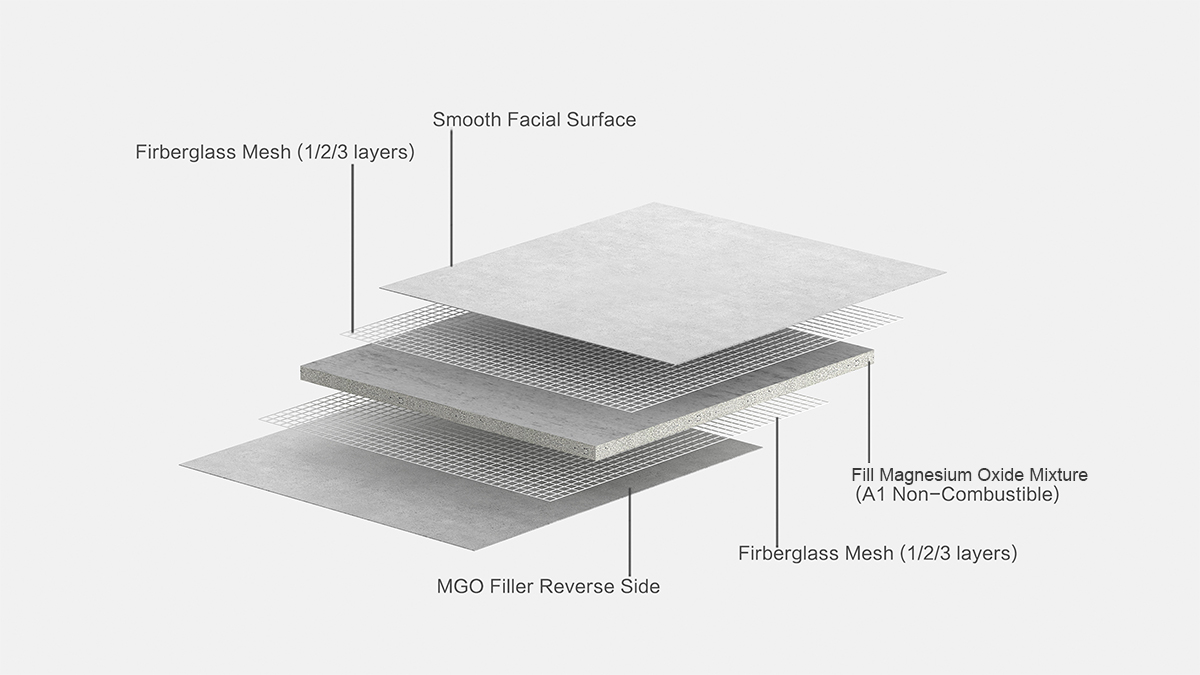 Magnesium Oxide Sheathing Structure
Magnesium oxide sheathing uses a special mix of materials. Magnesium oxide is the main part. It makes the board strong and fireproof. Magnesium chloride helps the board harden. This creates a tough cement. Fiberglass mesh makes the board stronger. It stops cracks from forming. Perlite keeps the board light. This makes it easy to carry. Water is needed for the chemical reaction. Sometimes, magnesium sulfate is used instead of magnesium chloride.
Here is a table that shows the main materials and what they do in magnesium oxide sheathing:
Raw Material | Role in Magnesium Oxide Sheathing |
|---|---|
Magnesium Oxide (MgO) | Main binder, gives strength and fire resistance |
Magnesium Chloride (MgCl₂) | Starts the hardening process |
Fiberglass Mesh | Adds strength and stops cracking |
Perlite | Makes the board lighter and easier to carry |
Water | Needed for the chemical reaction |
Magnesium Sulfate (optional) | Sometimes used instead of magnesium chloride |
This mix makes a board that can handle fire, water, and mold. You can use magnesium oxide sheathing where you need extra safety and strength.
Fiber Board Sheathing Structure
Fiber board sheathing is made from wood chips and leftover wood. These fibers are glued together with asphalt or resin. The board comes out smooth and even. This helps fiber board sheathing keep heat in and stay steady. But you need to be careful with water.
Note: Fiber board sheathing needs more support to be strong. If it gets wet for a long time, it can swell, get weak, and grow mold.
Here is a table that compares fiber board sheathing with other types:
Aspect | Fiber Board Sheathing | Plywood/OSB |
|---|---|---|
Strength | Lower | Higher |
Shear Strength | Not very strong | Better |
Moisture Resistance | Can get damaged | More resistant |
Thermal Resistance | Higher (R-value 1.3) | Lower (R-value 0.5-0.62) |
Installation Challenges | Needs more support | Easier to install |
Impact on Structural Performance
Magnesium oxide sheathing has many benefits for new buildings. It is waterproof, so it does not soak up water or swell. You can use it in bathrooms, kitchens, or wet places. The board does not bend or change shape when it gets hot or cold. Its high alkalinity stops mold and mildew. This helps keep the air inside clean.
Magnesium oxide sheathing does not burn, so it protects your building from fire.
It keeps heat in and blocks noise.
The board is lighter than fiber-cement boards. This makes it easier to carry and does not add much weight to your building.
Fiber board sheathing keeps heat in but needs extra support. It can get weak if it stays wet for too long. You must seal the seams well to keep water out. Fiber board works for some projects, but magnesium oxide sheathing is stronger and safer, especially in tough places.
mgo board sheathing vs fiber board sheathing: Key Comparison
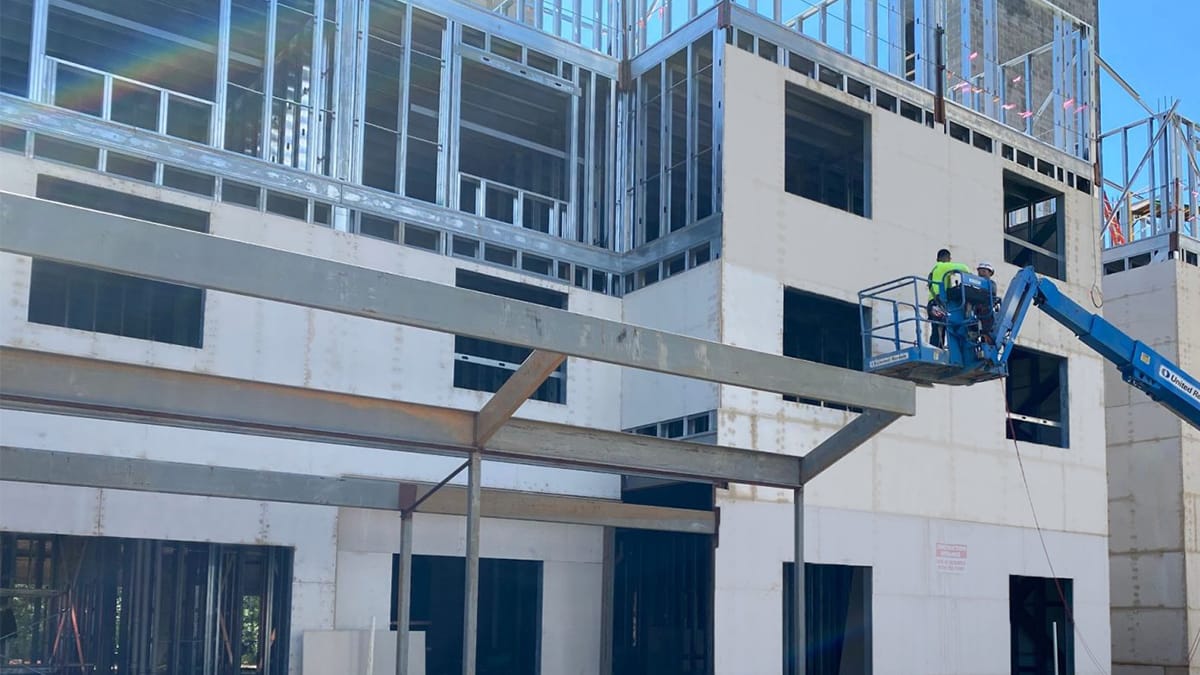 When you compare mgo board sheathing and fiber board sheathing, it helps you pick the right one for your project. This section looks at fire resistance, moisture resistance, durability, and how well they stop pests and mold. You will learn how each one works in real life.
Fire Resistance Comparison
Fire resistance is very important when you choose sheathing. You want your building to be safe if there is a fire. Mgo board sheathing is special because it can take very high heat. Most mgo board products, like EXACOR panels and MagPanel boards, pass tough fire tests. These tests include ASTM E119 and ANSI/UL 263. They also get a 0/0 rating on the ASTM E84 and UL 723 tests. This means fire does not spread on the board, and there is not much smoke.
Fiber board sheathing can slow down fire, but it does not work as well as mgo board. Fiber boards might burn or break faster than mgo board sheathing. Mgo board can let out water vapor during a fire. This helps cool things down and slows the fire.
Here is a table that shows how mgo board and fiber board do in fire tests:
Test Type | Fiber Board Performance | |
|---|---|---|
ASTM E119 | 1 to 4 hours fire rating | Up to 1 hour fire rating |
UL 723 (ASTM E84) | Class A rating, minimal flame spread | Class B or C rating |
Non-combustibility | 0/0 Flame Spread and Smoke Index | Higher flame spread |
Tip: If you need the best fire safety, pick mgo board sheathing. It keeps your building safe for longer and helps protect people in a fire.
Moisture Resistance Comparison
Moisture resistance is also very important. You want your sheathing to stay strong even when it gets wet. Mgo board sheathing does not bend, swell, or get weak when water touches it. It keeps its shape and stays strong in wet air. Tests show mgo board only takes in about 0.34% water. Plywood and fiber board take in much more.
Fiber board sheathing can handle some water, but it might swell or get weak if it stays wet. You have to seal fiber board well to keep water out. In places with lots of humidity, mgo board sheathing works better. It also stops mold and mildew from growing.
Here is a table that compares moisture resistance:
Property / Material | Magnesium Oxide (MgO) Board | Fiber Board Sheathing |
|---|---|---|
Moisture Absorption | 0.34% | Higher |
Warping/Swelling | No | Possible |
Mold/Mildew Growth | Prevents growth | May support growth |
Structural Integrity | Maintains in humidity | Can weaken |
Note: For wet places or places with lots of humidity, mgo board sheathing is stronger and lasts longer.
Durability and Longevity
Durability is important if you want your building to last a long time. Mgo board sheathing and fiber board sheathing are different in how long they last. Mgo board can last up to 100 years in homes and other buildings. It stays strong and does not break down easily. You can use mgo board in tough places, and it will last for many years.
Fiber board sheathing lasts a shorter time. It is good for cheaper projects, but it might not last as long as mgo board. If fiber board gets wet or damaged, it will not last as long. You have to check and fix fiber board more often.
Here is a quick list comparing durability and how long they last:
Mgo board sheathing:
Lasts up to 100 years
Stays strong in wet, hot, or cold places
Needs little fixing
Fiber board sheathing:
Lasts 20-40 years with good care
Can get weak if it gets wet or bugs get in
Needs regular checks and repairs
If you want your building to last a long time, mgo board sheathing is the best pick. It saves you time and money over the years.
Pest and Mold Resistance
Pest and mold resistance helps keep your building healthy. Mgo board sheathing and fiber board sheathing are not the same here. Mgo board sheathing does not feed bugs like termites or carpenter ants. Its special mix keeps bugs away. It also stops mold and mildew, even in damp places.
Fiber board sheathing has wood fibers, so bugs might eat it. Mold can grow on fiber board if it gets wet. You might have to clean and treat fiber board more often to keep it safe.
Here is a list comparing pest and mold resistance:
Mgo board sheathing:
Stops water from getting in
Stops mold and mildew from growing
Keeps bugs away
Fiber board sheathing:
Bugs might eat it if not treated
Mold can grow if it gets wet
Needs extra care in humid places
For the best pest and mold resistance, choose mgo board sheathing. It helps keep your building safe and healthy.
When you look at mgo board sheathing and fiber board sheathing for fire safety, moisture resistance, durability, and pest and mold resistance, mgo board sheathing is better in most ways. This comparison shows why mgo board is a smart choice for new buildings.
mgo vs fiber cement boards: Environmental & Health Factors
Sustainability Comparison
You want to pick a material that helps the planet. MgO board sheathing is a green choice. Making MgO boards uses natural minerals and less energy. This means fewer greenhouse gases go into the air. When you are done with MgO boards, you can recycle them. You can also throw them away safely. They do not hurt the environment.
Fiber board sheathing uses wood fibers and resins. Some companies use earth-friendly ways, but not all do. Fiber boards are harder to recycle. They can make more trash.
Many MgO and fiber board products have special certifications. These show the boards are safe and meet green rules:
Certification | Details |
|---|---|
CE | Safety and health compliance |
ISO | Consistent quality in manufacturing |
INTERTEK | Safety and performance standards |
MgO boards use green materials.
Makers keep making them safer and stronger.
Earth-friendly ways help protect nature.
Indoor Air Quality
You want clean air inside your house. MgO board sheathing does not let out bad chemicals, formaldehyde, or VOCs. This keeps your air safe and clean. If there is a fire, MgO boards do not make dangerous smoke.
Fiber board sheathing might have things that let out VOCs. These can make indoor air worse, especially in closed rooms.
Feature | MgO Board Sheathing | Fiber Cement Board Sheathing |
|---|---|---|
Chemical Emissions | Might let out some VOCs | |
Safety in Fire | No dangerous smoke | Not always listed |
Environmental Impact | Natural, recyclable materials | Not always listed |
Safety in Handling
You want to be safe when you put up sheathing. Always wear a dust mask and safety glasses when you cut, sand, or shape MgO or fiber boards. Use wet ways or a HEPA vacuum to clean up dust. Do not sweep dry, because dust can get in the air. If you use galvanized steel framing with MgO boards, put something between the steel and the board.
Tip: Keep yourself and your team safe by following these easy steps when you install sheathing. 🦺
Installation and Cost Comparison
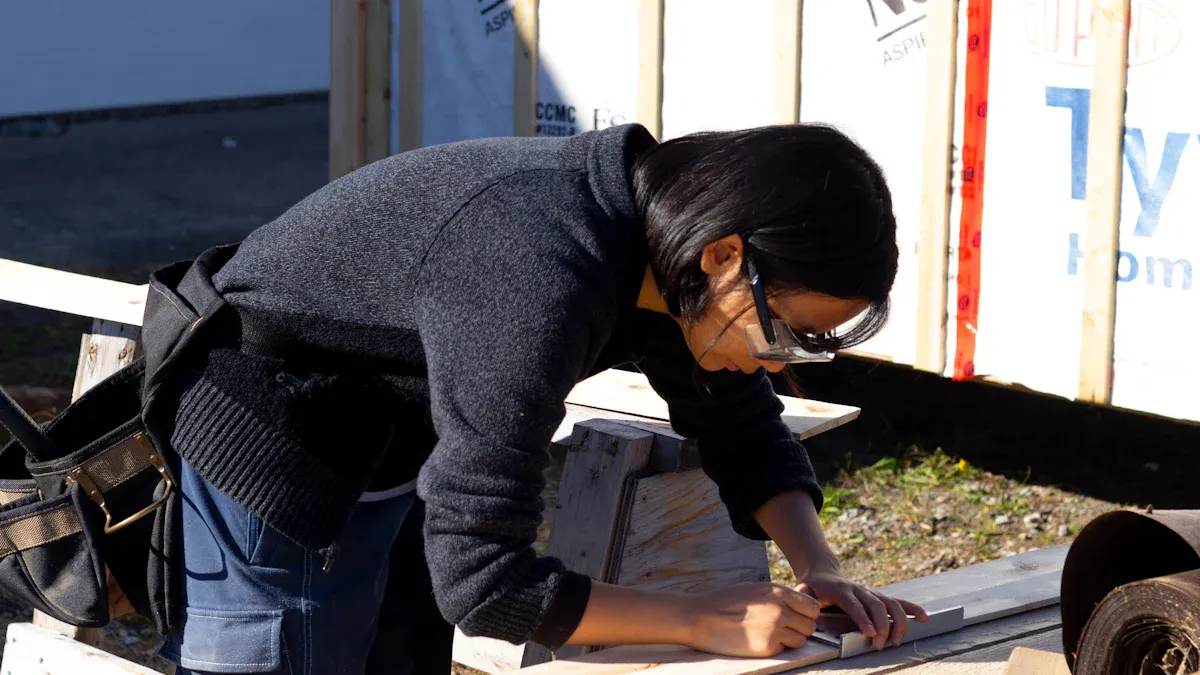
Ease of Installation
When you start a building project, you want a sheathing that is easy to install. Fiber cement board installation is usually straightforward. You can cut fiber cement board with standard tools, and the panels are not too heavy. You can lift them with a small team. The process does not need special training. You get the benefits of quick work and less stress.
MgO board installation is different. You need special saws with diamond or carbide blades for clean cuts. The boards are heavier than fiber cement board, so you may need lifts or extra hands. MgO boards can crack if you drop them or handle them roughly. You must plan ahead and work as a team. Here is a table that shows common challenges with MgO board installation:
Challenge | Description |
|---|---|
Expensive saws with diamond or carbide blades are required. | |
Brittleness | Boards can crack or break if mishandled. |
Weak nail holding power | Nails do not grip as well as in wood boards. |
Aesthetic finishing | Extra steps like skim coating and sanding may be needed. |
Tip: Always use the right tools and handle MgO boards with care to get the most benefits from their strength.
Material and Labor Costs
You want to know how much your project will cost. Fiber cement board is usually less expensive than MgO board. The panels cost less, and you do not need special tools for fiber cement board installation. Labor costs stay low because the work goes fast. You get the benefits of saving money and time.
MgO board costs more at first. You pay extra for the panels and the tools. Labor costs can go up because you need more people and more time. However, you get the benefits of higher strength and better fire resistance. Over time, these benefits can save you money on repairs.
Maintenance and Lifecycle Costs
You want your building to last. Fiber cement board needs regular checks. You must look for cracks, water damage, or mold. If you find problems, you must fix them fast. Fiber cement board installation is easy, so repairs do not take long. The benefits of fiber cement include good strength and simple upkeep.
MgO board needs less maintenance. The panels resist water, mold, and pests. You do not need to check them as often. The strength of MgO board means fewer repairs. Over the life of your building, you get the benefits of lower costs and less work.
Note: If you want long-term savings, MgO board gives you strong benefits in maintenance and lifecycle costs.
Best Use Cases & Recommendations
Residential Applications
 Residential Applications
You want your house to be safe and dry. Mgo and fiberboard are both choices for sheathing. Mgo panels work well inside on walls and ceilings. They are good in wet places like bathrooms and kitchens. You can use mgo outside for siding and sheathing. This helps protect your home from fire and water. Mgo can go under floors in wet rooms. It also works for panels that save energy. Some people use mgo for fire barriers or decoration. Fiberboard is also used for walls and ceilings. But you need to watch out for mold and moisture. Mgo board is good because it stops fire and mold. Fiberboard is cheaper and easy to put in.
Wall and ceiling panels for inside
Sheathing and siding for outside
Flooring and subflooring
Insulated panels for saving energy
Fire barriers and decoration
Commercial & High-Performance Builds
You want strong boards for schools and offices. Mgo and fiberboard are different in how they work. Mgo gives you fire and water resistance. It is also better for the environment. Mgo is used in places that need clean air and strong walls. Fiberboard works in some buildings, but you must check for mold and water problems. Mgo boards help you build safe and strong places.
Feature | Description |
|---|---|
Fire Resistance | Mgo board does not burn and stops flames from spreading. |
Water Resistance | Mgo board does not get damaged by water. |
Eco-friendliness | Mgo boards are better for the planet and help keep buildings green. |
Used in schools, hospitals, and offices
Good for safe and healthy buildings
Climate Suitability
You want boards that work in your weather. Mgo and fiberboard both do well in wet places. Mgo is also good in places with fire risk. Fiberboard works in wet climates but does not stop fire as well. You need to think about mold and moisture when you pick a board.
Sheathing Type | Moisture Resistance | Fire Resistance | Best Climate Zones |
|---|---|---|---|
MgO Board | High | High | |
Fiber Cement Board | High | Moderate | Wet areas |
Decision Guide
You want to pick the best board for your project. Compare mgo and fiberboard for moisture, mold, and how they last. If you need fire safety and mold resistance, choose mgo. If you want to save money and install easily, pick fiberboard. Mgo boards are good for tough weather and strong buildings. Mgo board gives you safety and strength. Fiberboard is good if you want to spend less. Think about your weather, building type, and what you need.
Tip: Always pick boards that fit your weather and building. This helps your building last longer and work better. 🏠
You want sheathing that keeps your building safe. MgO board sheathing is great for fire and water resistance. It is easy to put in and does not need much fixing. Fiber board costs less at first. But you have to take care of it more often.
Factor | MgO Board Sheathing | Fiber Board Sheathing |
|---|---|---|
Fire Resistance | Superior | Moderate |
Water Resistance | Fully waterproof | Moisture-resistant |
MgO sheathing is best for wet or fire-risk places. Pick the material that fits your weather, budget, and safety needs.
FAQ
What makes MgO board sheathing safer than fiber board?
MgO board resists fire, water, and mold. You get better protection for your building. Fiber board can burn and swell if it gets wet. MgO board keeps your space safer.
Can you install MgO board sheathing with regular tools?
You need special blades, like diamond or carbide, to cut MgO boards. Standard saws may not work well. Always use safety gear when you handle MgO panels.
Is fiber board sheathing good for wet climates?
Fiber board works in some wet areas, but it can swell or grow mold. You must seal it well. MgO board stays strong and dry in wet climates.
Which sheathing lasts longer?
Sheathing Type | Expected Lifespan |
|---|---|
Up to 100 years | |
Fiber Board | 20–40 years |
MgO board lasts much longer. You spend less time and money on repairs.