
27 Dec Top 5 Fireproof Sheathing Boards for Safer Buildings
You want strong fire protection for your building. Here are the Top 5 Fireproof Sheathing Boards types that help keep you safe:
MgO board sheathing
Fiber cement board
Fire rated gypsum board (Type X and Type C)
Mineral wool board
Fire-rated plywood
Fire resistant sheathing slows fire down. It protects people and limits damage. You need sheathing that is tough and lasts a long time. It should fit your budget and be easy to install. It must work well for your project. Fire resistant sheathing keeps heat and flames away. It helps keep people safe and assists rescue teams.
In 2022, there were over 1.5 million building fires. Fire resistant sheathing controls how strong the fire gets. It keeps buildings steady and provides you with better safety and fire protection.
Key Takeaways
Fire resistant sheathing boards help keep buildings safe from fire. They give people more time to get out. They also help firefighters do their job.
Pick the right fireproof sheathing for your needs. Use MgO boards in places with a lot of heat. Use fiber cement boards where there is a lot of moisture.
Always look at fire resistance ratings. Check local building codes too. This makes sure your sheathing is safe.
Think about how much it costs to install. Some boards are heavy or hard to put in. You might need a professional to help.
Fire resistant sheathing can make insurance cheaper. It can also make your property worth more. It helps keep people safe.
Fire Resistant Sheathing Basics
What Is Fire Resistant Sheathing?
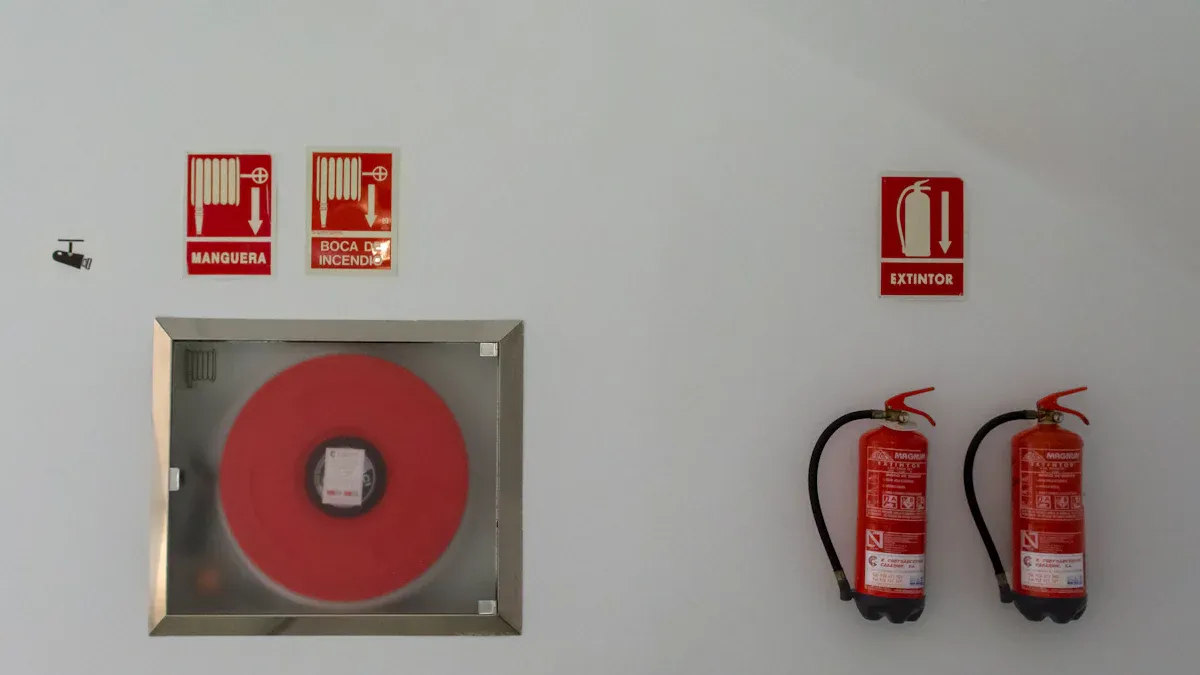
Fire resistant sheathing helps protect buildings from fire. It works like a shield that slows down flames and heat. This keeps the building strong if there is a fire. There are different materials used for fire resistant sheathing. Each material helps stop fire in its own way.
Here is a table that lists common materials and how they help with fire protection:
Material | Function |
|---|---|
Fire-rated CDX sheathing | Adds extra protection to weak spots in buildings. |
ZIP System | Improves fire resistance when used with gypsum sheathing. |
LP® FlameBlock® Fire-Rated Sheathing | Stops flames from spreading and burning through, meeting safety codes. |
You can find these materials in walls, roofs, and floors. They help buildings meet fire safety rules and codes. Fire resistant sheathing does not make a building fireproof. It gives people more time to get out and helps firefighters do their job.
Why Fireproof Sheathing Matters
Fire resistant sheathing helps keep buildings safe. It gives better fire protection and can save lives. It stops fire from moving fast through walls and ceilings. This slows down damage and gives people more time to act.
Fire resistant sheathing must follow strict safety rules. These rules make sure the sheathing can handle heat and flames. Here are some common fire safety codes and ratings:
Code Reference | Description |
|---|---|
CRC § R302 | Needs fire-resistant materials for outside walls of buildings. |
CA Building Code for Exterior Wildfire Exposure | Requires fire-resistant wall assemblies, including sheathing. |
California Fire Code | Sets tough fire safety rules for building construction. |
Standard | Description |
|---|---|
ASTM E119 (UL 263) | Tests how long materials can resist fire. |
ASTM E84 | Checks how fast flames and smoke spread. |
ASTM E136 | Finds out if materials can catch fire. |
UL Solutions | Tests and certifies products for safety. |
NFPA 101 | Sets rules for building safety and fire protection. |
International Fire Code | Lists safety and fire rules for buildings. |
Some people believe fire retardant plywood is fireproof, but it only slows fire down. New fire resistant sheathing also helps lower harmful smoke. You do not need special tools to use it. It can save money by reducing the need for extra fire protection.
Tip: Always look at fire resistance ratings and safety codes before picking your sheathing. This helps you build a safer home or business.
Top 5 Fireproof Sheathing Boards Types
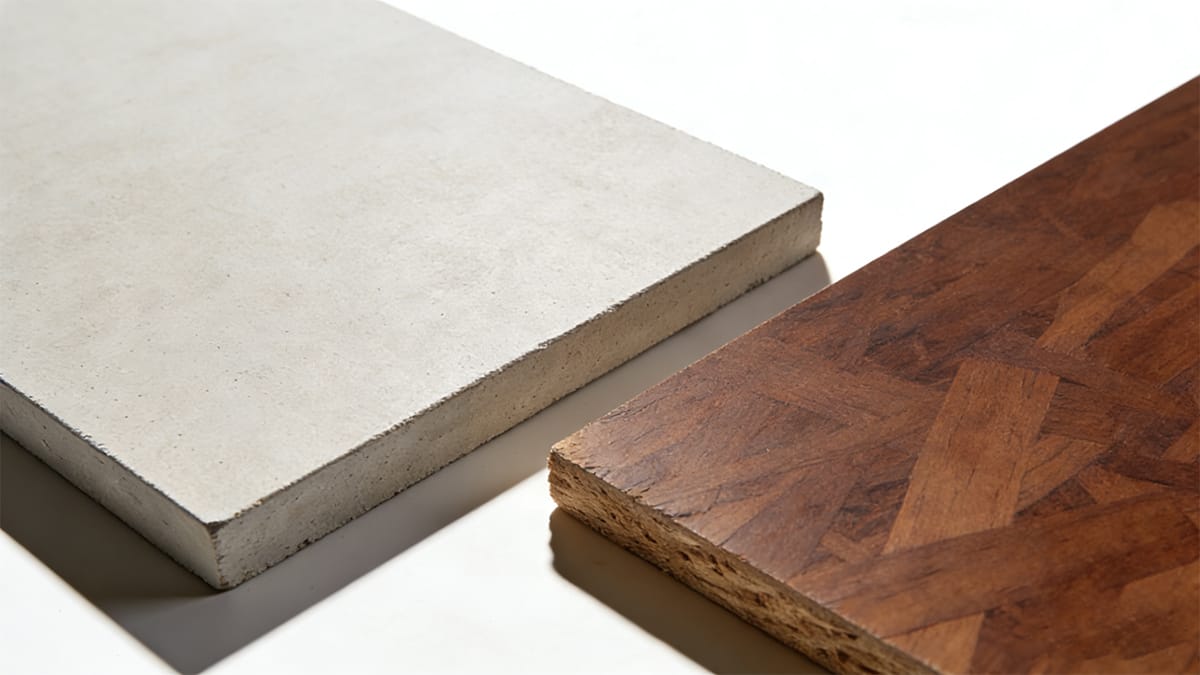 If you want fire protection, you should know the top 5 fireproof sheathing boards types. Each type has special fire resistant sheathing features. Some boards work better in certain places. You can use these boards to make homes, schools, offices, and factories safer. They help meet fire resistance ratings.
MgO Board Sheathing
MgO boards are great for fire resistant sheathing. They protect against fire and heat up to 1,800°F. MgO board sheathing is made from magnesium oxide, magnesium chloride, and fiberglass. You see these boards in busy or wet places like kitchens and bathrooms. They are also used in commercial buildings. MgO boards are non-combustible. They work well in homes, businesses, and factories.
Fire resistance ratings for MgO board sheathing can last 30 minutes in fire tests. These boards get an A1 non-combustible rating in Europe. They do well in ASTM E84 and E119 tests. MgO boards can resist fire for one to two hours or more.
MgO boards are waterproof and insect-resistant. They are strong and do not need chemicals. They resist moisture, scratches, and hits. You can install them easily because they are light.
MgO boards cost more than gypsum drywall or calcium silicate board. You should be careful about dust when installing. There is not much data about how long they last.
MgO board sheathing helps stop fire from spreading. It keeps buildings safe in emergencies. You see these boards in tall offices and homes where fire protection is important.
Material | Fire Resistance Performance | Composition | Common Applications |
|---|---|---|---|
MgO Board | Handles heat up to 1,800°F | Magnesium oxide, magnesium chloride, fiberglass | Busy or wet places |
Fiber Cement Board
Fiber cement board is a strong fire resistant sheathing. It is made from cement and fibers. This board does not burn easily. It helps keep buildings safe from fire. Fiber cement board does not help flames spread. This makes buildings safer.
You use fiber cement board in kitchens, bathrooms, and commercial spaces. It is good for places where fire is a risk. You can put it on outside walls, floors, and roofs. It works well in fire-rated walls and hallways.
Fiber cement board is non-combustible. It meets NFPA standards. It gives strong fire rated performance and keeps buildings safe. You can use it in homes, offices, and schools. It is good near fireplaces or furnaces.
Fiber cement board is easy to install and lasts a long time. It does not rot or bend. You can use it with calcium silicate board for more fire protection.
Key Features Table:
Material | Fire Resistance Performance | Composition | Common Applications |
|---|---|---|---|
Fiber Cement Board | Resists flames and heat | Cement and fibers | Kitchens, bathrooms, commercial spaces |
Fire Rated Gypsum Board (Type X & Type C)
Fire rated gypsum board is a simple and cheap fire resistant sheathing. You use it in many buildings to slow fire and protect people. Type X gypsum board gives a one-hour fire resistance rating for 5/8″ panels. Type C gypsum board has special additives. These additives swell and seal joints when there is a fire.
Type C gypsum board lasts longer than Type X. It works best in places like ceilings. You see both types in offices, malls, apartments, hospitals, schools, and data centers.
You use fire rated gypsum board to make fire barriers. It protects escape routes and equipment. You put it in corridors, stairwells, and safe zones.
Fire rated gypsum board is easy to install and saves money. It works well with calcium silicate board for extra fire protection.
Comparison Table:
Aspect | Type X Gypsum Board | Type C Gypsum Board |
|---|---|---|
Definition | 1-hour fire resistance for 5/8″ | Enhanced panels exceeding Type X |
Fire Resistance Mechanism | Fibers reduce cracking; shrinks under heat | Additives cause swelling, improving fire resistance at joints/seams |
Fire Resistance Duration | Meets 1-hour rating | Provides longer fire resistance |
Typical Use Cases Table:
Use Case | Description |
|---|---|
Commercial Building Fire Barriers | Used in office complexes and shopping malls to create fire-rated walls and partitions, containing fires and protecting escape routes. |
Residential Safety in Multi-Unit Dwellings | Incorporated in corridors and stairwells of apartments to provide residents more time to evacuate during a fire. |
Data Centers and Critical Infrastructure | Installed around server rooms to safeguard sensitive equipment and prevent data loss during fires. |
Healthcare Facilities | Utilized in hospitals to contain fires and protect vulnerable populations, facilitating safe evacuation. |
Educational Institutions | Incorporated in schools to create safe zones that withstand fire incidents long enough for evacuation. |
Mineral Wool Board
Mineral wool board is a top fire resistant sheathing and insulation. It is made from spun rock or slag. Mineral wool board can handle heat up to 2,000°F. This makes it one of the best for fire protection. You use it in arenas, factories, and places that need soundproofing.
Mineral wool board is non-combustible. It acts as a fire stop. It gives great sound insulation and a higher R-value per inch than fiberglass. Mineral wool board uses 70% recycled material. This makes it better for the environment.
You use mineral wool board in walls, roofs, and floors. It does not absorb water or grow mold. You do not need staples or wire to hold it.
Mineral wool board helps keep big buildings and sound-sensitive places safe.
Mineral wool is good for the environment because it uses natural and recycled materials. This can help reduce waste. But it does not break down in landfills. It can be hard to install safely.
Key Features Table:
Material | Fire Resistance Performance | Composition | Common Applications |
|---|---|---|---|
Mineral Wool Panels | Handles heat up to 2,000°F | Spun rock or slag | Arenas, factories, soundproofing |
Fire-Rated Plywood
Fire-rated plywood is a wood fire resistant sheathing treated with chemicals. These chemicals slow down flames. You use fire-rated plywood in public buildings, transport hubs, schools, hospitals, offices, and homes. It is found in roofs, floors, walls, shelves, stairs, subfloors, decks, balconies, siding, and storefronts.
Fire-rated plywood comes in three classes: A, B, and C. Class A has a flame spread index of 0–25. It is best for schools, hospitals, and offices. Class B (26–75) is good for homes and small businesses. Class C (76–200) works for sheds, garages, and low-risk places.
Fire-rated plywood has low thermal conductivity. This slows heat and keeps buildings safer during a fire. You must use fire-rated plywood that meets ASTM E-84 Class A, CAN/ULC S102-10, or Euroclass B-s1,d0 for high-risk places.
You use fire-rated plywood in garages, stairwells, attic walls, and floors between units in homes. You install it in hallways, corridors, lobbies, and elevator shafts in offices. It works well in warehouses, factories, and storage units.
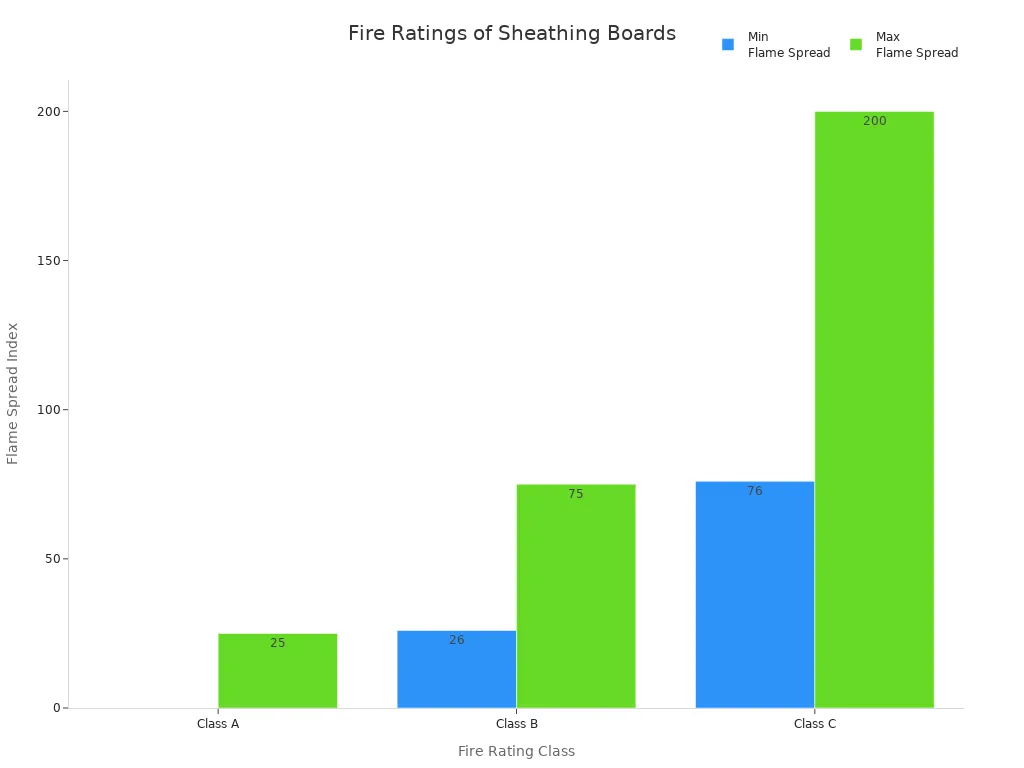
Fire-Rated Plywood Table:
Class | Flame Spread Index | Best Use Cases |
|---|---|---|
A | 0–25 | Schools, hospitals, offices |
B | 26–75 | Homes, small businesses |
C | 76–200 | Sheds, garages, low-risk areas |
Suitability List:
Residential construction: attached garages, stairwells, attic walls, floors between units.
Commercial buildings: hallways, corridors, lobbies, elevator shafts.
Industrial facilities: warehouses, factories, storage units.
Public spaces: schools, hospitals, government buildings.
Summary Table: Top 5 Fireproof Sheathing Boards Types
Material | Fire Resistance Performance | Composition | Common Applications |
|---|---|---|---|
MgO Board | Handles heat up to 1,800°F | Magnesium oxide, magnesium chloride, fiberglass | Busy or wet places |
Fiber Cement Board | Resists flames and heat | Cement and fibers | Kitchens, bathrooms, commercial spaces |
Fire-Rated Gypsum Board | Simple and cheap | Gypsum | General construction |
Fire-Retardant Plywood | Treated to slow flames | Wood-based, treated with chemicals | Public buildings, transport hubs |
Mineral Wool Panels | Handles heat up to 2,000°F | Spun rock or slag | Arenas, factories, soundproofing |
You can pick from the top 5 fireproof sheathing boards types to make your building safer. Each board has different fire rated performance, resistance, and ratings. You should choose the right fire resistant sheathing for your needs to get the best results.
Fire Rated Gypsum Board Comparison
 Type X vs Type C
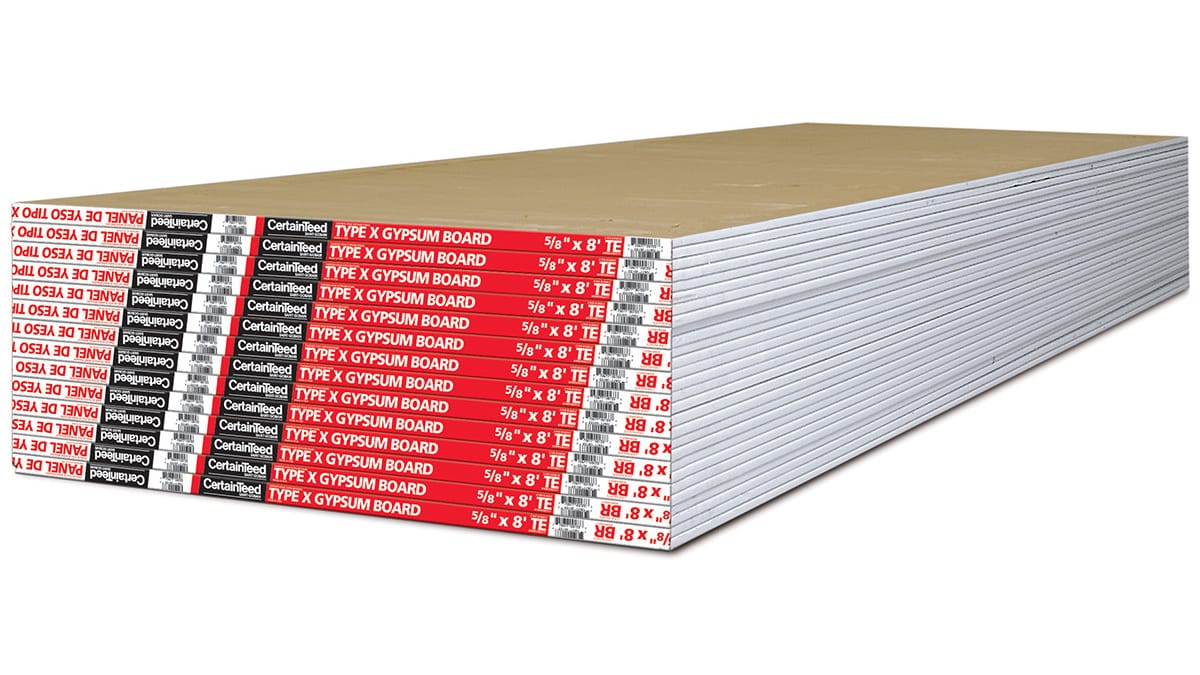 Type X vs Type C
It is important to know how type X and type C gypsum boards are different. Type X gypsum board has glass fibers that help stop fire. You see type X in lots of buildings. It meets basic fire resistance rules. Type X gives walls a one-hour fire rating. You can put it up easily. It works with other sheathing materials.
Type C gypsum board gives even stronger fire protection. It has special additives that grow bigger when there is fire. This growth fills gaps and stops fire from moving through joints. Type C lasts longer in fire tests. You find type C in places like stairwells and corridors. Use type C if you want extra safety and longer fire resistance.
Feature | Type X Gypsum Board | Type C Gypsum Board |
|---|---|---|
Fire Resistance | Good | Excellent |
Additives | Glass fibers | Special expanding |
Common Use | General walls | High-risk areas |
Fire Resistance Ratings | 1 hour | More than 1 hour |
Tip: Always check your local building codes before choosing your fire rated gypsum board. Some places need type C for better fire safety.
Best Uses for Gypsum Boards
You can use fire rated gypsum board in many places. It works well in homes, schools, and offices. Put it in corridors, stairwells, and escape routes. These spots need strong fire resistance to keep people safe. You also see gypsum board in data centers and hospitals. It helps protect equipment and patients from fire.
You can use fire rated gypsum board with other sheathing for more fire protection. Put it in ceilings and walls between apartment units. This board gives people more time to get out during a fire. You can trust gypsum board to meet fire resistance ratings and keep buildings safe.
Use in corridors and stairwells
Install in escape routes
Combine with other fire resistant sheathing
Place in ceilings and walls between units
Note: Fire rated gypsum board gives strong fire resistance. Always follow the installation guides for the best fire protection.
MgO Board Sheathing Features
Fire Resistance
MgO board sheathing gives strong fire protection. It does not burn or make smoke. This board can handle heat over 1,382°F for more than 30 minutes. The color does not change when it gets hot. MgO board meets high fire resistance ratings. Builders use it in fire-rated walls to slow fire. It helps keep people safe. You can trust MgO board during a fire. It helps you follow strict building codes.
Durability & Moisture
MgO board sheathing is tough and strong. You can use it in places with lots of rain or snow. It keeps water out and blocks mold and fungus. This board helps keep indoor air clean. MgO board does not bend or break in bad weather. It stays strong in cold or hot places. You do not need to fix or replace it often. This sheathing lasts a long time and gives good fire protection.
Characteristic | Description |
|---|---|
Fire Resistance | |
Moisture Resistance | Keeps water out and stops mold and fungus. |
Performance in Extreme Weather | Stays strong in cold, heat, and humidity. |
Longevity and Maintenance Benefits | Needs little fixing and keeps its shape for years. |
Installation & Cost
MgO board sheathing costs more than OSB or plywood. You pay extra for better fire and water protection. It is heavier than other boards. You may need help to lift and put it in place. You must cut and seal the edges carefully. Some builders use special tools for this job. These steps help keep fire and water protection strong.
Material | Cost Comparison | Advantages |
|---|---|---|
MgO Board | Costs more than OSB/plywood | Better fire and water protection; lasts longer |
OSB/Plywood | Costs less | Standard fire protection |
MgO board gives you:
Strong fire protection for safer buildings
Great water and mold resistance
Lasts a long time and stays strong
Costs more and needs careful installation
Tip: Plan for the extra weight and special steps when using MgO board sheathing. This helps you get the best fire and water protection for your building.
Fiber Cement Board Overview
Fire Resistance
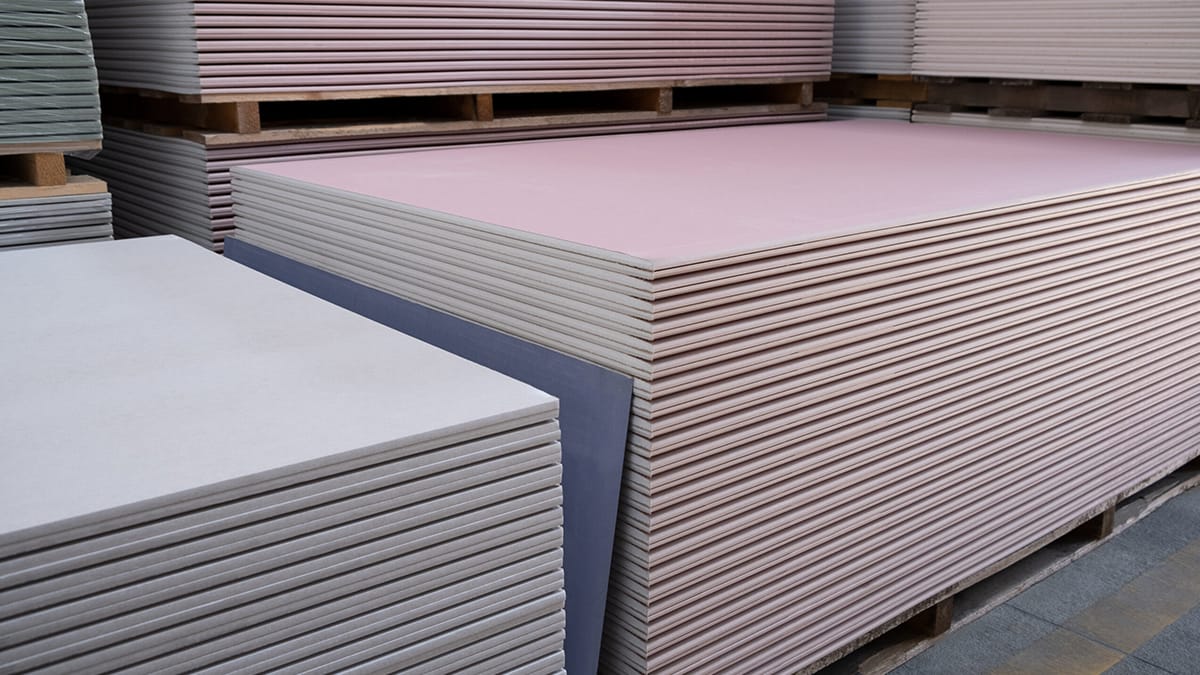 Fire Resistance
You can count on fiber cement board for strong fire protection in your building. This fire resistant sheathing does not burn easily. It slows down flames and keeps heat from moving through walls. You see fiber cement board in places that need high fire resistance ratings, such as kitchens, hallways, and commercial spaces. The board meets strict ratings and safety codes. You get extra time to escape during a fire. Fire resistant sheathing like fiber cement board helps keep people safe and limits damage.
Tip: Always check the fire resistance ratings before you choose sheathing for your project. This helps you meet safety rules and protect your building.
Durability & Moisture
Fiber cement board gives you good durability and strength. It stands up to fire, heat, and daily wear. You can use it in busy places where you need tough fire resistant sheathing. The board resists moisture, but it can absorb water if you do not seal it well. You need to care for it to keep its durability and strength over time. Fiber cement board can crack if you hit it hard or if water stays on it for a long time. You should compare it to other boards before you decide.
Here is a table that shows how fiber cement board compares to MgO board:
Property | Fiber Cement Board | MgO Board |
|---|---|---|
Moisture Resistance | Moisture-resistant but can absorb water if not sealed | Excellent water resistance; does not grow mold or rot |
Durability | Durable but can crack under impact or prolonged water exposure | Tough and maintains strength when wet |
Maintenance | Requires regular care to last longer | Low-maintenance, suitable for harsh conditions |
You see fiber cement board used in places where fire and moisture are risks. You need to seal and maintain it for the best results.
Installation & Cost
You need to think about cost and installation factors when you pick fiber cement board. The board is heavy, so you may need special tools and help to install it. Cutting fiber cement board makes dust that can be harmful. You should wear a mask and use the right tools. Professional installation gives you better results and warranties.
Here is a table that shows cost and installation factors for fiber cement board:
Cost Factor | Price Range |
|---|---|
Fiber Cement Price | |
Panels | $2.50–$15/sq ft |
Planks (clapboards) | $0.70–$6/sq ft |
Shingles | $2–$6/sq ft |
Professional Installation | $2–$8/sq ft |
Old Siding Removal | $0.70–$2.00/sq ft |
Paint/Finishes | $2.50+/sq ft |
Mold/Damage Repair | $9–$23/sq ft |
DIY Risks | Heavy material, special tools required, hazardous dust when cut. |
Benefits of Professional | Warranties, proper insulation, enhanced curb appeal. |
You pay more for fiber cement board than for some other fire resistant sheathing. You get strong fire protection and good resistance, but you need to plan for installation and care. You can use fiber cement board in homes, schools, and offices where fire and moisture are risks.
Note: Always plan for cost and installation factors before you start your project. This helps you avoid problems and get the best fire resistant sheathing for your needs.
Mineral Wool Board Benefits
Fire & Heat Insulation
You want strong fire protection in your building. Mineral wool board gives you some of the best fire resistant sheathing available. This sheathing stands out because it does not burn. You can use it in walls, roofs, and floors to slow down fire. The board can handle heat up to 2,000°F. This high resistance keeps your building safe for a longer time.
Mineral wool board blocks fire and heat from moving through your sheathing. You get better fire resistance ratings when you use this material. Firefighters have more time to help, and people have more time to leave the building. You can trust mineral wool board for fire resistant sheathing in schools, factories, and arenas.
Here is a quick look at how mineral wool board helps with fire:
Feature | Benefit |
|---|---|
High heat resistance | Stops fire from spreading quickly |
Non-combustible | Does not catch fire or melt |
Sound insulation | Blocks noise as well as fire |
Easy to install | Fits in many types of sheathing systems |
Tip: Always check the fire resistance ratings for your sheathing. Mineral wool board often meets or beats the highest ratings.
Environmental Impact
You care about the environment as well as fire safety. Mineral wool board uses natural rock or recycled slag. This makes it a greener choice for fire resistant sheathing. You help reduce waste when you pick this sheathing for your project.
Mineral wool board does not use chemicals to get its fire resistance. You do not have to worry about harmful fumes during a fire. The board lasts a long time, so you do not need to replace it often. This saves resources and money.
You can recycle mineral wool board after its use. Some boards use up to 70% recycled content. This lowers the impact on landfills. You get strong fire protection and help the planet at the same time.
Mineral wool board uses natural and recycled materials.
The board does not release toxic smoke during fire.
You can recycle it after use.
Note: Choose mineral wool board if you want both fire resistant sheathing and a lower environmental impact.
Fire-Rated Plywood Insights
Fire Ratings
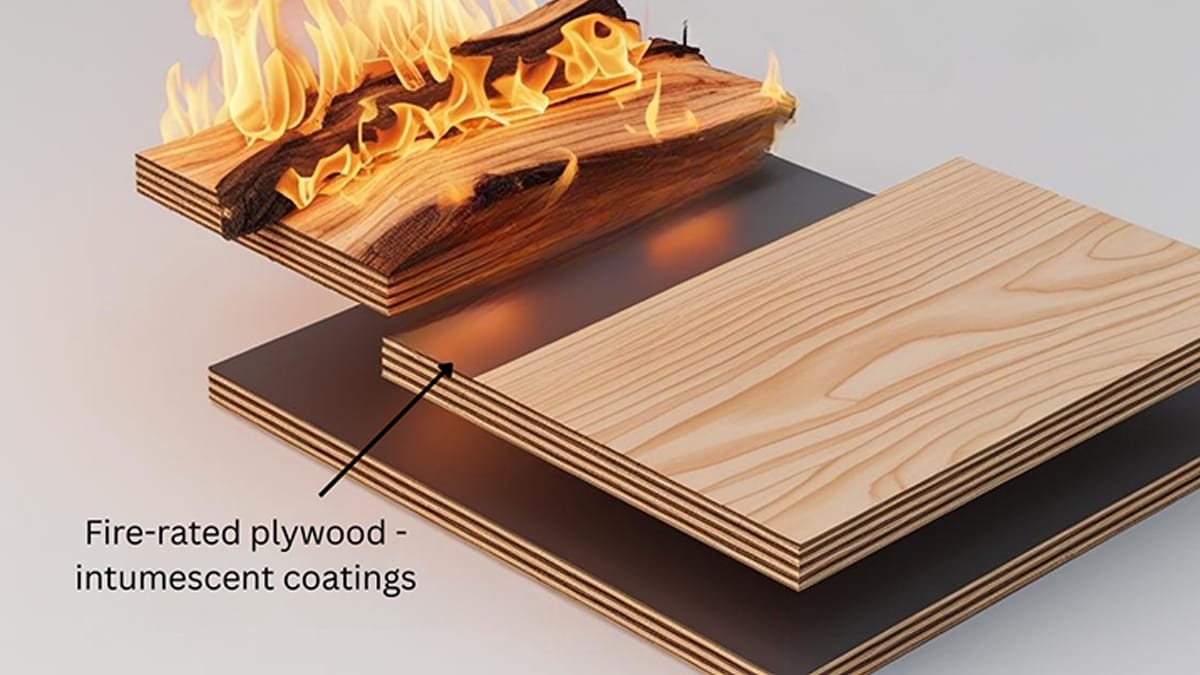 Fire Ratings
You can trust fire-rated plywood to slow down fire and help protect your building. This type of sheathing gets special treatment with chemicals that boost its fire resistance. When you use fire-rated plywood, you add a layer of fire protection to your walls, floors, or ceilings. The fire resistance ratings for plywood depend on the class. Class A plywood gives you the highest level of resistance. It stops fire from spreading quickly. Class B and Class C offer less resistance, but they still help slow fire.
Here is a table to help you see the differences in fire resistance ratings:
Plywood Class | Flame Spread Index | Fire Resistance Level |
|---|---|---|
A | 0–25 | Highest |
B | 26–75 | Moderate |
C | 76–200 | Basic |
Tip: Always check the fire resistance ratings before you choose your sheathing. This helps you meet local codes and keeps your building safer.
Suitability & Cost
You can use fire-rated plywood in many places. It works well in homes, schools, offices, and public spaces. You often see this sheathing in stairwells, corridors, and between floors. Fire-rated plywood gives you a balance of fire protection and strength. You can cut and install it with regular tools. This makes it easy for builders and homeowners.
The cost of fire-rated plywood is higher than regular plywood. You pay more for better fire resistance and safety. The price depends on the class and thickness. You should plan your budget before you start your project.
Here are some reasons to choose fire-rated plywood for your fire resistant sheathing:
You get strong fire resistance for key areas.
You can use it in many types of buildings.
You install it with basic tools.
You meet fire safety codes and improve fire protection.
Note: Fire-rated plywood gives you a simple way to boost fire resistance in your building. Always follow the manufacturer’s instructions for the best results.
Comparison Table: Fire Resistant Sheathing
You want your building to be safe from fire. Each sheathing type protects in different ways. Some last longer and cost more. Others are easier to put in. The table below shows these differences. It helps you choose the best one for your project.
Sheathing Type | Fire Resistance (Hours/Rating) | Durability | Average Cost (4×8 Sheet) | Installation Difficulty | Best Use Cases |
|---|---|---|---|---|---|
Up to 2 (A1, 1200°F+) | Very High (moisture, mold, impact) | $30–$50 | Moderate (heavy, needs sealing) | Fire barriers, humid areas, outside fire-rated walls | |
Fiber Cement Board | 1–2 | Very High (50 years, weatherproof) | $25–$40 | Moderate (heavy, dust) | Kitchens, bathrooms, commercial fire walls |
Fire Rated Gypsum Board (Type X) | 1–4 | Moderate (can dent, not water-resistant) | $10–$15 | Easy (lightweight, cuts easily) | Walls, ceilings, partitions in homes and offices |
Fire Rated Gypsum Board (Type C) | Over 2 | Moderate (better than Type X) | $12–$18 | Easy | Ceilings, stairwells, high safety buildings |
Mineral Wool Board | Up to 2,000°F | High (does not rot, mold, or burn) | $40–$60 | Easy (fits between studs) | Arenas, factories, soundproof fire barriers |
Fire-Rated Plywood | Class A: 0–25 (Index) | High (structural, water-resistant) | $20–$40 | Easy (cuts with tools) | Floors, roofs, corridors, public spaces |
MgO board and fiber cement board are strong and last a long time. They work well in wet places or where you need tough boards. Fire rated gypsum board costs less and still protects well. You can use it in homes and offices. Type C gypsum board is better for places that need extra safety.
Mineral wool board is great for stopping heat and fire. It also blocks sound. Use it in places that need both. Fire-rated plywood is strong and slows fire. You can cut it with normal tools.
Tip: Always look at fire resistance ratings before you choose. This helps you follow safety rules and keeps your building safe.
Use the table to compare fire protection, strength, price, and how hard it is to install. Pick the sheathing that works best for your building and keeps you safe.
Choosing the Right Fire Resistant Sheathing
Residential Projects
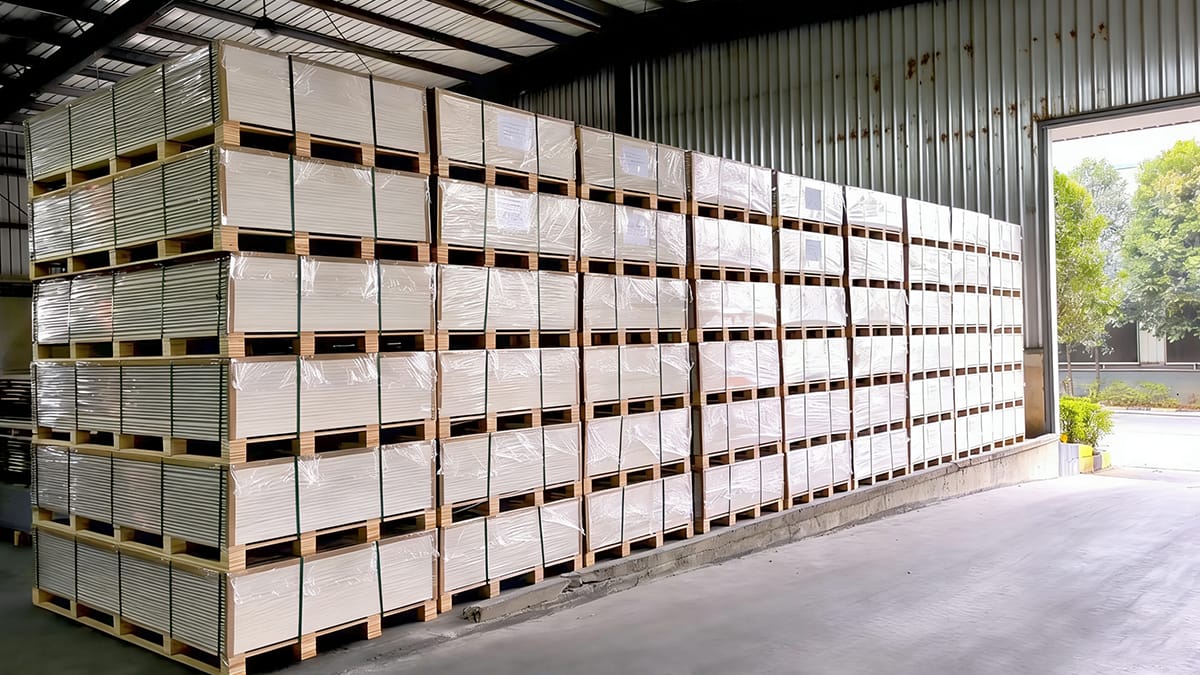 Residential Projects
When you build or fix a house, you want your family to be safe from fire. Picking fire resistant sheathing is about more than just the price. You should check if the sheathing does not burn and if it stays strong when wet. Cement board and magnesium oxide board work well in damp places. Fiber cement also gives good fire protection and does not burn easily. Always follow the right steps when you put it in. This helps stop fire from moving through cracks or edges.
Before you choose a product, look for trusted labels. These labels show the sheathing meets fire safety rules. It is important to follow building codes. Local rules can be different, so always check what your area needs. Many new rules now say you must use noncombustible products after big fires.
Pick strong and flexible materials so they last longer.
Choose sheathing that works well when it gets wet.
Make sure the product does not burn.
Follow the best ways to install it.
Look for labels that show safety.
Learn about your local building codes.
Tip: Try to balance safety and cost. This helps you get the best protection for your home.
Commercial Buildings
Commercial buildings need strong fire safety and tough fire resistant sheathing. You must follow strict fire safety rules and building codes. Some products work better for big buildings. For example, Gold Bond eXP Fire-Shield Sheathing is good for outside walls that need fire protection. MagTech Fire Retardant OSB Sheathing meets ASTM E84 and UL 723. It gives extra fire protection and makes walls stronger.
Product Name | Features |
|---|---|
Gold Bond eXP Fire-Shield Sheathing | Good for outside walls that need fire protection. |
MagTech Fire Retardant OSB Sheathing | Meets ASTM E84 and UL 723, works in fire-rated walls, adds fire protection and strength. |
You should always balance safety and cost. Pick sheathing that gives strong fire protection and fits your building’s needs. Following building codes keeps your building safe and legal.
Specialty Applications
Some projects need special fire resistant sheathing. Roof boards help protect your roof and building from fire. You can use them with metal, bituminous, or single ply roofs. They work well for roof terraces, green roofs, and solar panel roofs. Exterior gypsum sheathing helps stop air, water, and fire from moving through walls. It also blocks noise and mold.
Application Type | Description |
|---|---|
Exterior Gypsum Sheathing | Used under other materials to block air, water, mold, noise, and fire. |
Protects roof systems from fire and heat, works on many types of decks. |
When you pick fire resistant sheathing for special projects, look for these features:
Feature | Description |
|---|---|
Non-combustibility | Does not catch fire or make it worse. |
Thermal Insulation | Slows down heat, protects rooms next to the fire. |
Smoke Resistance | Makes little smoke or toxic gas, safer for people leaving. |
Structural Stability | Stays strong during a fire, helps stop collapse. |
Fire-Rated Certification | Tested by labs to show it works in a fire. |
Note: Always check fire safety ratings and make sure your sheathing meets standards like ASTM E119, UL 263, and ASTM E84. This keeps your building safe and helps you follow all rules.
You can make your building safer by picking the right fire resistant sheathing. Each board helps stop fire in its own way. Magnesium oxide and fiber cement boards give strong fire safety. They last a long time. Fire rated gypsum boards are good for schools and hospitals. Mineral wool boards help block heat and sound. The table below shows what each board does well and what is not so good:
Material Type | Strengths | Weaknesses |
|---|---|---|
High fire resistance, moisture resistant | Needs careful installation | |
Fiber cement board | Excellent fire protection, non-combustible | Can crack if not sealed |
Gypsum board | Good resistance, easy to install | Breaks down at high heat |
Mineral wool board | Handles extreme fire, eco-friendly | Harder to install |
Fire-rated plywood | Easy to cut, slows fire spread | High flammability |
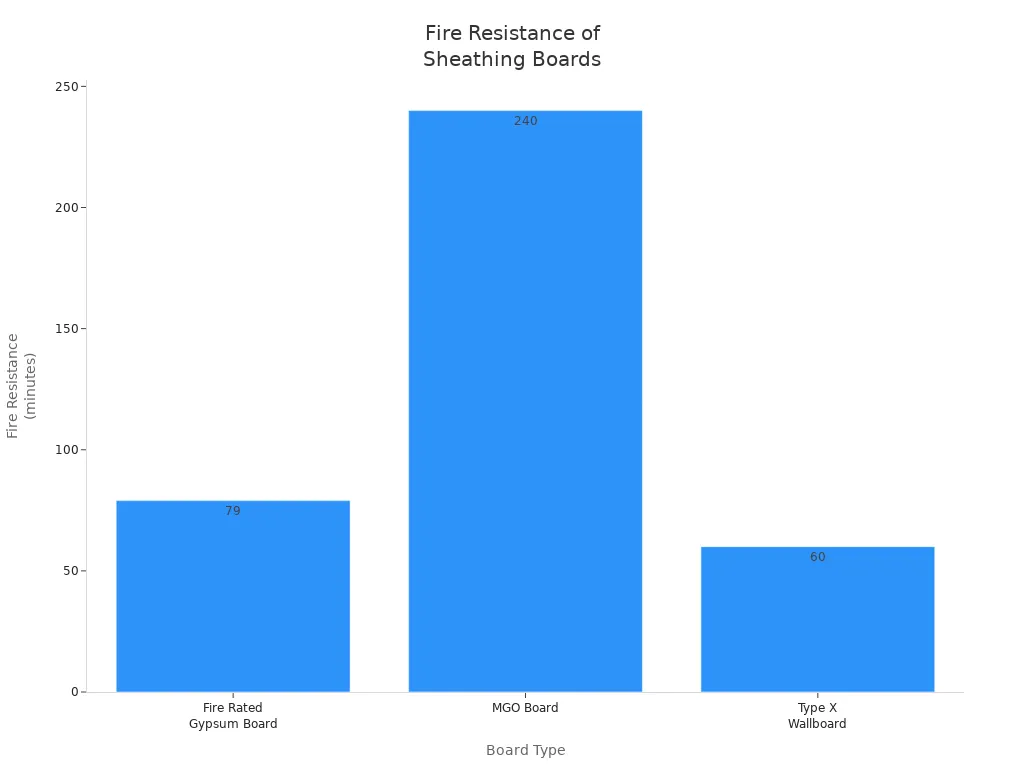
You keep people and things safe when you focus on fire safety. You can pay less for insurance and your home may be worth more. Always follow fire codes and talk to experts for help. Make fire protection the most important part of your project.
FAQ
What is the main benefit of fireproof sheathing boards?
You get extra time to escape during a fire. Fireproof sheathing boards slow down flames and heat. This helps protect your building and keeps people safer.
Can you install fireproof sheathing boards yourself?
You can install some boards yourself if you follow the instructions. Heavy boards like MgO or fiber cement may need help. Always wear safety gear and check local codes.
How do you know if a board is truly fire resistant?
Look for labels with ratings like ASTM E119 or UL 263. These show the board passed fire tests. You should always check the product’s certification before you buy.
Do fireproof boards also protect against water and mold?
Many fireproof boards, such as MgO and fiber cement, resist water and mold. You get both fire and moisture protection. Always check the product details for these features.