
28 Dec MgO Board Sheathing or Gypsum Board Sheathing Which Performs Better
When you compare MgO board sheathing vs gypsum board sheathing, you can see they function differently. MgO board sheathing excels in fire safety, strength, and moisture resistance. For instance, it does not burn in high heat and maintains its strength when exposed to water. On the other hand, gypsum board sheathing performs adequately but can break or expand if it gets wet. The table below illustrates how each type performs:
Feature | MgO Board Sheathing | Gypsum Board Sheathing |
|---|---|---|
Fire Resistance | Superior, does not burn | Good, weaker in heat |
Moisture Resistance | Excellent | Limited |
Durability | Very durable | Moderate |
You should choose the option that best suits your project needs.
Key Takeaways
MgO board sheathing stops fire better. It can last up to four hours in very hot places. This makes it good for places where fires happen a lot.
Pick MgO board for wet places. It does not get damaged by water or mold. Gypsum board can get bigger and break when it gets wet.
MgO board stays strong for a long time. It can last up to 100 years. You will fix it less than gypsum board.
Gypsum board sheathing costs less at first. But you might pay more later for fixing and replacing it.
Think about how easy it is to put in. Gypsum board is lighter and easier to move. MgO board needs more care when you install it.
Mgo Board Sheathing vs Gypsum Board Sheathing Overview
 What Is MgO Board Sheathing
 What Is MgO Board Sheathing
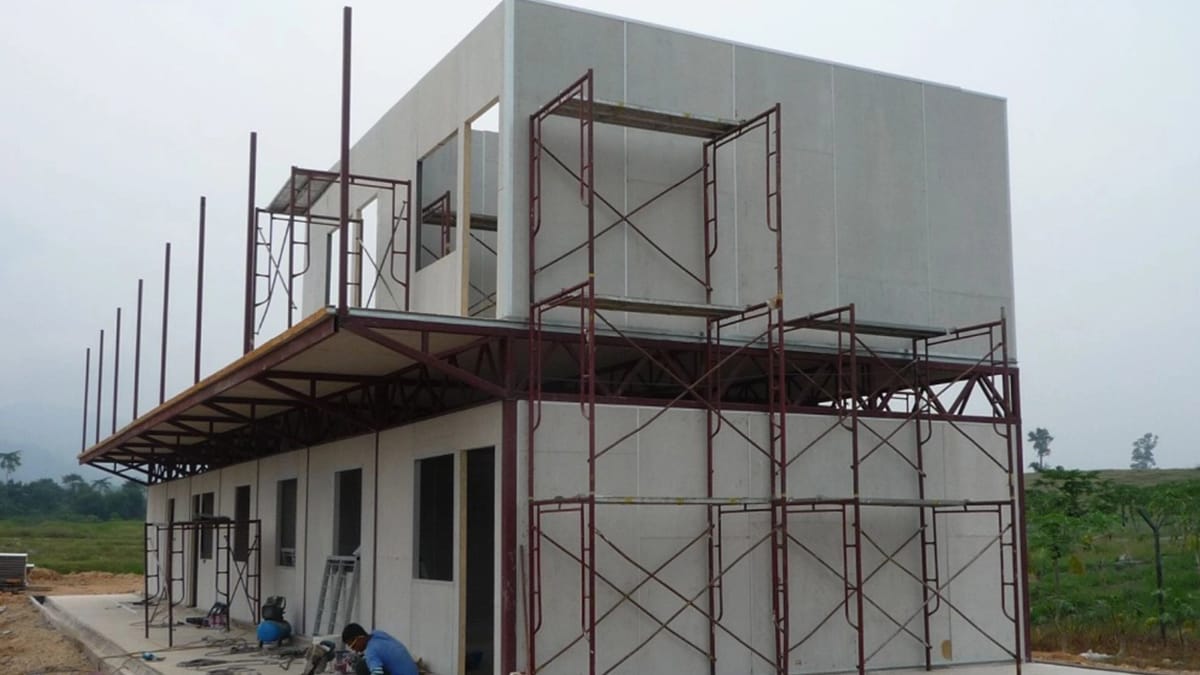
When you look at mgo board sheathing, you see a material made from magnesium oxide, magnesium sulfate, and fiberglass mesh. This combination creates a strong and stable board. Magnesium oxide board stands out because it resists fire, water, and mold. You can use it in places where you need extra protection and durability. The board feels solid and does not break easily. Many builders choose mgo board sheathing for projects that need long-lasting results.
Material Type | Composition Details |
|---|---|
Made from magnesium oxide (MgO), magnesium sulfate, and reinforced with fiberglass. |
What Is Gypsum Board Sheathing
Gypsum board sheathing uses a core made from gypsum, which is a soft mineral. Each side of the board has a layer of paper. This design gives the board a smooth finish and makes it easy to cut and install. You often see gypsum board used for walls and ceilings in homes and offices. It works well for basic protection and can help slow down fire, but it does not handle water as well as mgo board. If you need a simple and cost-effective solution, gypsum board sheathing is a common choice.
Material Type | Composition Details |
|---|---|
Gypsum Board | Primarily made from gypsum with a paper facing on either side. |
Typical Applications
You can use mgo board sheathing in many ways. Builders often pick it for interior and exterior walls, ceilings, and even as a base for tile in wet areas. It works well in homes, offices, and factories because it stands up to impact and moisture. You might also see it as a backboard for furniture or as a subfloor.
Gypsum board sheathing is popular for indoor walls and ceilings. It helps protect against fire and can resist mold in some cases. You will find it in homes, schools, and commercial buildings. Some types of gypsum board sheathing offer extra fire resistance or moisture protection.
Tip: Choose mgo board sheathing for areas with high moisture or where you need extra strength. Pick gypsum board sheathing for standard indoor walls and ceilings where cost matters most.
Fire Resistance Comparison
Fire Resistance of MgO Board
When you look for the best fire resistance in sheathing, magnesium oxide (MgO) board stands out. You can trust MgO board to protect your building in fire-prone areas. This board does not burn or melt, even at very high temperatures. In fact, MgO board sheathing can withstand temperatures up to 1200°F without releasing harmful gases. You will find that it stays strong and stable during a fire.
MgO board sheathing has a fire resistance level (FRL) of 30 minutes in standard tests.
The FRL depends on how much the board loses mass, how you detail the joints, and how far apart you space the studs.
Real-world case studies show MgO board can resist fire for up to four hours.
MgO board is non-combustible and does not spread smoke or flames.
You can see why many builders choose MgO board for fire-rated applications and fire-prone areas. It gives you peace of mind and strong protection.
Fire Rated Gypsum Board vs Standard Gypsum Board
You may wonder how fire rated gypsum board compares to standard gypsum board. Both types use gypsum as the main material, but fire rated gypsum board has special features. Manufacturers add glass fiber and other materials to increase its fire resistance. This makes fire rated gypsum board much better at slowing down flames than standard gypsum board.
Fire rated gypsum board slows the spread of fire and lasts longer under heat.
It has a flame spread rating of 15, which is much lower than regular gypsum board.
The glass fiber inside helps the board stay together when exposed to fire.
Standard gypsum board does not have these extra protections and can break down faster in a fire.
If you need fire rated assemblies, you should always pick fire rated gypsum board over the standard type. It gives you better resistance and helps keep your building safer.
Which Performs Better in Fire
You want to know which sheathing performs best in a fire. The answer is clear when you compare MgO board sheathing and gypsum board sheathing side by side. MgO board gives you the highest level of fire resistance. It does not burn, does not spread smoke, and can last up to four hours in a fire. Gypsum board, even the fire rated type, cannot match this level of protection.
Here is a quick comparison:
Material | Fire Resistance Duration | Temperature Resistance | Flame Spread Rating | Combustibility |
|---|---|---|---|---|
Magnesium Oxide (MgO) Board | Up to 4 hours | Up to 800ºC (1472ºF) | 0/0 (No spread/smoke) | Non-combustible |
Fire Rated Gypsum Board | About 30 minutes | Moderate | 15 | Combustible |
Note: MgO board sheathing gives you the best fire resistance for fire-prone areas. Fire rated gypsum board is a good choice for many buildings, but it cannot match the performance of MgO board in extreme fire situations.
When you need the highest fire resistance, choose MgO board sheathing. If you want a cost-effective solution for less risky areas, fire rated gypsum board can still provide good protection.
Moisture Resistance
MgO Board Performance
 MgO Board Performance
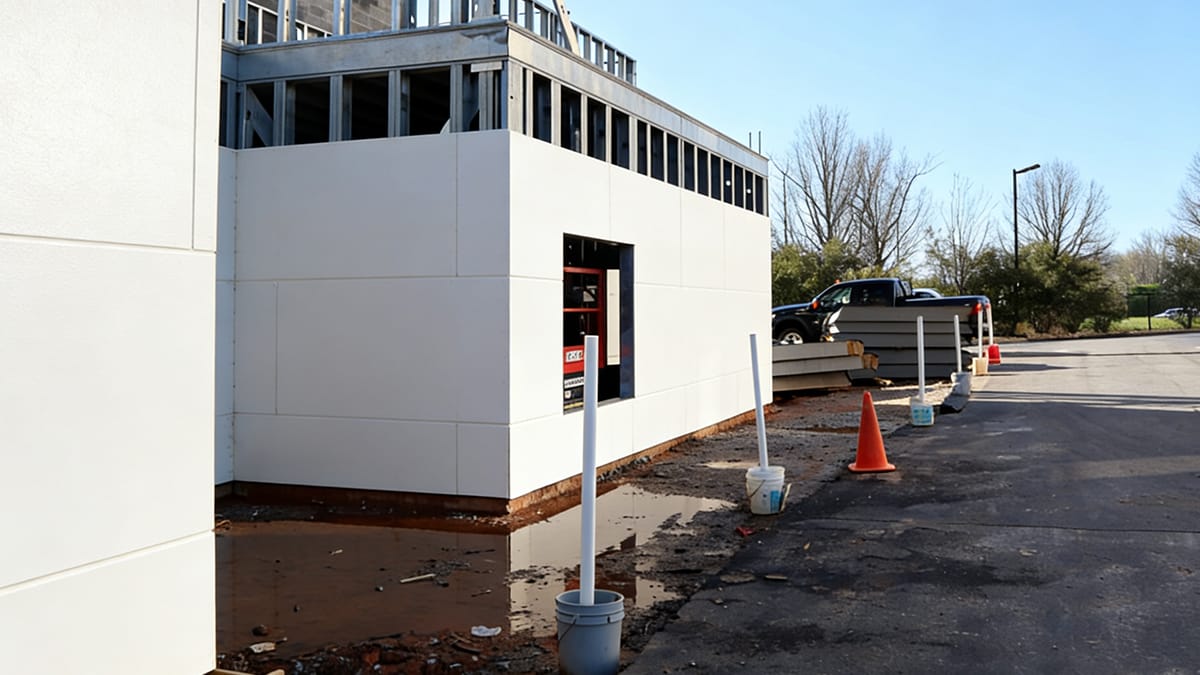
You need sheathing that can handle water. MgO board sheathing is great at stopping moisture. It does not soak up much water. You do not have to worry about water damage. In tests, MgO board only absorbs 0.34% water. This small amount helps the board stay strong and keep its shape. Even in wet places, it works well. You can use MgO sheathing in bathrooms or near the ocean. The board does not swell or bend. It keeps its strength for a long time.
Feature | MgO Board | Gypsum Board |
|---|---|---|
Surface Moisture Absorption | 0.34% | Nearly 3% |
Gypsum Board Performance
Gypsum board sheathing does not do well with water. It soaks up water much faster. Its surface moisture absorption is almost 3%. When it gets wet, gypsum board can swell and get soft. It loses its strength and can break. Over time, water can ruin it. You might see it bend or fall apart. In places with lots of moisture, gypsum board gets worse quickly. You may need to replace it sooner in wet areas.
Material | Performance in High-Humidity | Stability Over Time |
|---|---|---|
MgO Sheathing | Maintains integrity | |
Gypsum Sheathing | Absorbs water, loses integrity | Deteriorates over time |
Mold and Mildew Issues
Water can cause mold and mildew to grow. MgO board sheathing is good at stopping mold. It does not let mold grow, even if it gets wet for a long time. You can use it in damp places. Gypsum board sheathing can get moldy if it stays wet. Mold grows fast on gypsum board. If water damages it, you might smell something musty. You could also see dark spots. If you want to stop mold and mildew, MgO sheathing is the best choice.
Tip: Pick MgO board sheathing for places with lots of water. It helps protect your building from mold and mildew.
Durability and Strength
Impact Resistance
When you choose sheathing for your project, you want it to stand up to bumps and knocks. MgO board sheathing handles heavy impacts much better than gypsum board sheathing. If you hit MgO board, it stays strong and does not crack easily. Gypsum board can get damaged with less force. You may see dents or holes if something hits it hard. The table below shows how each material compares:
Material | Durability | Impact Resistance |
|---|---|---|
Magnesium Oxide Board | Stronger | Handles heavy impacts |
Gypsum Board | Less strong | Can get damaged easier |
Tip: If you expect a lot of wear and tear, MgO board sheathing gives you better protection against everyday accidents.
Longevity and Wear
You want your walls to last for many years. MgO board sheathing offers a much longer lifespan than gypsum board sheathing. Studies show MgO boards can last up to 100 years. They stay strong after aging tests and do not break down quickly. Gypsum boards need more repairs and replacements over time. They can get moldy if they get wet, and they lose strength faster. MgO boards resist moisture, mold, and pests, so you do not have to worry about frequent fixes.
MgO boards have an estimated lifespan of up to 100 years.
MgO boards remain strong after aging tests.
Gypsum boards break down faster under stress.
MgO boards resist moisture, mold, and pests.
While MgO boards may cost more at first, you save money in the long run because you do not need as many repairs or replacements. This makes MgO board sheathing a smart choice for long-term value.
Structural Strength
You need sheathing that supports your building and keeps it safe. MgO board sheathing provides excellent structural strength and durability. It stays stable even after many years. Gypsum board sheathing does not offer the same level of support. It can weaken over time, especially if exposed to moisture or heavy use. When you want strength and durability for your walls, MgO board sheathing stands out as the better option.
Comparative Aspect | Magnesium Oxide (MgO) Board | Traditional Boards (Drywall, Plywood, Gypsum) |
|---|---|---|
Estimated Lifespan | Up to 100 years | Shorter life, more repairs needed |
Mold Resistance | High; mold-free for 3+ years | Gets mold when wet |
Durability & Structural Stability | Stays strong after aging tests | Breaks down faster under stress |
Note: MgO board sheathing gives you peace of mind with its strength and durability. You can trust it to protect your building for many years.
Cost and Value
Material Costs
When you compare material costs, you notice a clear difference between MgO board sheathing and gypsum board sheathing. MgO board costs more per square foot. You usually pay between $1.50 and $2.50 for MgO board. Gypsum board sheathing is cheaper, with prices ranging from $0.50 to $1.00 per square foot. This lower price makes gypsum board a popular choice for projects with tight budgets.
Board Type | Cost per Square Foot | Long-term Value |
|---|---|---|
MgO Board | $1.50 – $2.50 | Strong, fireproof, and water-resistant, saving money in the long run. |
Gypsum Board | $0.50 – $1.00 | Cheaper upfront but may need more repairs, costing more over time. |
Tip: If you want to save money at the start, gypsum board sheathing gives you a lower upfront cost.
Installation Costs
You should also think about installation costs when choosing sheathing. MgO board sheathing is heavier and harder to handle. This means you may pay more for labor. Workers need more time and effort to install MgO board. Gypsum board sheathing is lighter and easier to cut, so it costs less to install.
Aspect | MgO Board Sheathing | Gypsum Board Sheathing |
|---|---|---|
Installation Cost | Slightly higher due to specialized handling | Lower due to common usage |
Installation Ease | Heavier, more labor-intensive | Lightweight, easy to install |
Labor Expenses | Higher due to difficult handling | Lower due to ease of installation |
Note: You may pay more for labor with MgO board sheathing, but you get a stronger and more durable wall.
Long-Term Value
When you look at long-term value, MgO board sheathing stands out. You pay more at first, but you save money over time. MgO board resists water, fire, and mold. It rarely needs repairs or replacement. This makes it a smart choice for schools, hospitals, and places where long-term durability matters. Gypsum board sheathing costs less at the start, but it can dent, crumble, or get moldy. You may need to patch or replace it after only a few years. These repairs add up and can make gypsum board more expensive in the long run.
If you want sheathing that lasts and protects your building, MgO board sheathing gives you better value over time.
Installation Factors
Handling and Cutting
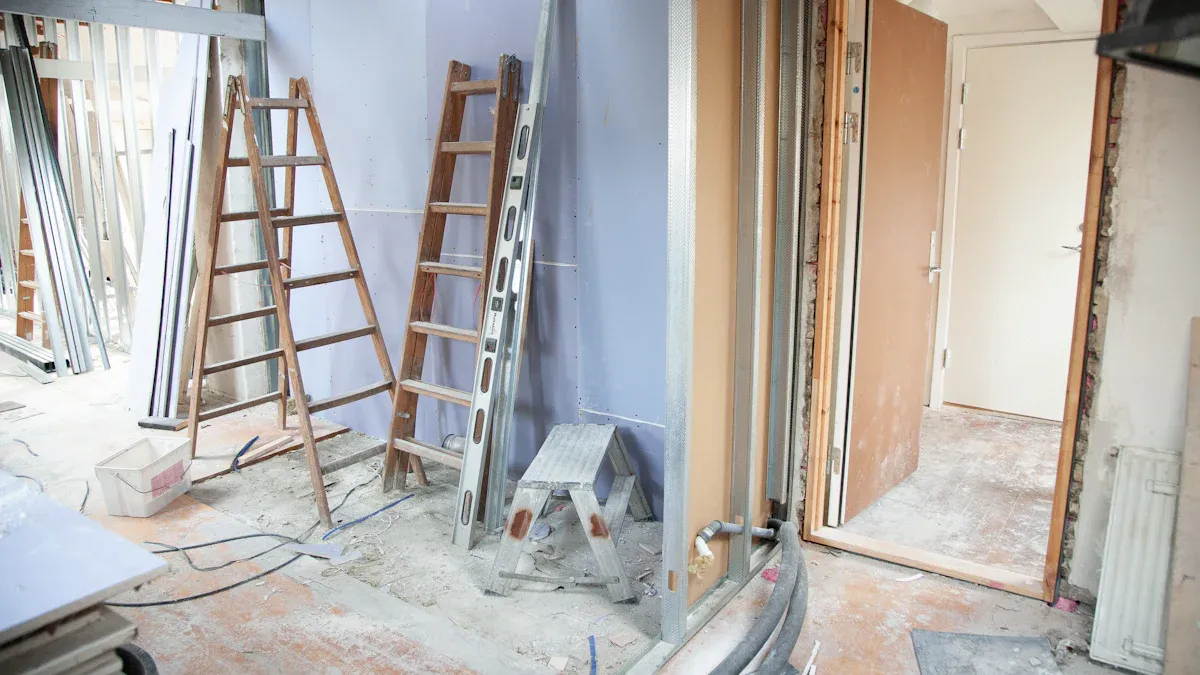
When you work with sheathing, you want to keep each board in good shape. You should lift each sheet with both hands to prevent snapping. Avoid dragging boards across rough surfaces because this can cause chipping. If you need to move large boards, ask for help to stay safe. Always wear gloves and goggles to protect yourself.
You can cut MgO board sheathing using a thin carbide circular saw or a worm drive saw. For the edges, use carbide tools to rout them smoothly. If you want a simple cut, score the board with a razor blade and snap it from the smooth side. This method may need extra finishing work. Store MgO boards in a cool, dry place to keep their quality. Carry boards on their side to protect the edges and corners. Stack boards flat on dunnage or other materials, not directly on the ground.
Gypsum board sheathing is easier to cut. You can score it with a utility knife and snap it cleanly. This gives you better ease of installation compared to MgO board. You will find that handling gypsum board takes less effort.
Fastening and Compatibility
You need the right fasteners for each type of sheathing. Use screws or nails that resist corrosion when you attach MgO board. Place screws about 6 inches apart at the sides and 12 inches apart in the center for strong support. For gypsum board, make sure nail or screw heads press tightly against the face but do not cut into the surface. Staples should have the crown parallel to the framing. Keep fasteners at least 3/8 inch from the edges and ends of the panel. If you do not need shear values, space fasteners no more than 8 inches apart along the vertical ends or edges.
Both MgO board and gypsum board sheathing work with common fasteners, but MgO board may need more care during installation. You will notice that the ease of installation is higher with gypsum board because it is lighter and simpler to fasten.
Common Challenges
You may face some challenges when installing sheathing. The table below shows common issues with MgO board:
Installation Challenge | Description |
|---|---|
Requires expensive saws with diamond-tipped or thin carbide blades for precision cutting. | |
Brittleness | MgO boards are rigid and brittle, increasing the risk of cracking during installation. |
Surface Finish | Achieving a smooth finish is challenging, often requiring additional steps like skim coating and sanding. |
Gypsum board sheathing does not have as many cutting or finishing problems. You will find it easier to install and finish. If you want a smooth process, gypsum board offers fewer challenges.
Tip: Choose the right sheathing for your project by considering handling, fastening, and installation challenges. This helps you save time and avoid mistakes.
Environmental Impact
Sustainability of MgO Board
You might wonder how MgO board sheathing affects nature. MgO board is made from natural materials. It takes less energy to make MgO board. Making MgO board gives off less carbon dioxide than gypsum board. You can see the numbers in the table below:
Material | Carbon Footprint (kg CO2 per ton) | Energy Consumption | CO2 Sequestration |
|---|---|---|---|
Magnesium Oxide | 340 | Lower | Yes |
Gypsum | 740 | Higher | No |
MgO board sheathing can be recycled. You can use it again when you are done with it. Many builders pick MgO board for green building projects. It helps lower the carbon footprint of your building.
Sustainability of Gypsum Board
Gypsum board sheathing uses gypsum, which is easy to find. You can recycle gypsum board, but making it uses more energy. The table below shows how both types compare for the environment:
Material | Sustainability Aspects | Environmental Impact |
|---|---|---|
MgO Board | Eco-friendly, made from natural materials, fully recyclable, contributes to better indoor air quality. | Lower due to production process and material properties. |
Gypsum Board | Made from abundant gypsum, recyclable, but manufacturing process can be energy-intensive. | Higher due to energy-intensive manufacturing. |
You might pick gypsum board sheathing because it costs less and is easy to get. If you want to use less energy, MgO board sheathing is a better pick.
Indoor Air Quality
You want clean air inside your building. MgO board sheathing does not have harmful chemicals. It does not have formaldehyde or asbestos. MgO boards give off very few VOCs. This helps keep the air fresh. Gypsum board sheathing soaks up more water, which can cause mold. Mold and mildew can make the air worse and cause health problems. MgO board sheathing does not let mold grow because it resists water. You can use MgO board in hospitals and schools to keep the air safe.
MgO board gives off very low VOCs.
MgO board sheathing’s water resistance stops mold and mildew.
Gypsum board sheathing soaks up more water, which can cause mold.
Tip: If you want better air inside, pick MgO board sheathing for your project.
Best Uses and Recommendations
When to Choose MgO Board
 When to Choose MgO Board
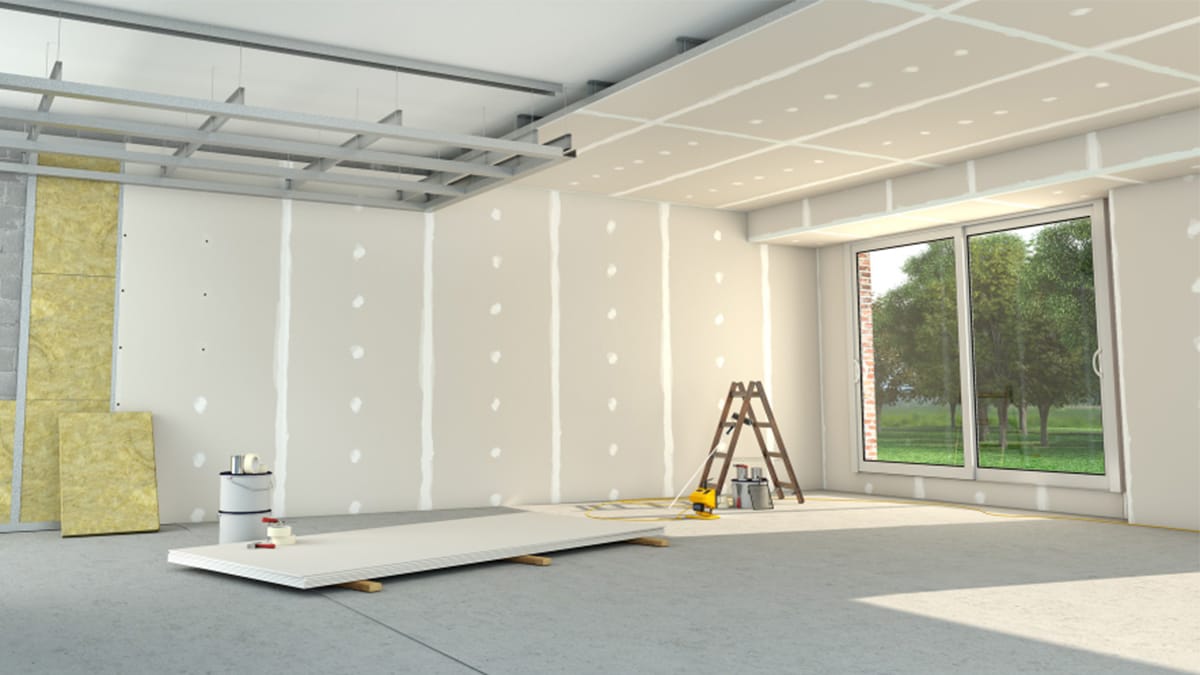
You should pick MgO board sheathing when you need strong protection. This type of sheathing works best in places with high fire risk. It can handle temperatures over 1,382°F for more than 30 minutes and gives up to four hours of fire resistance. You also want MgO board sheathing in areas with lots of moisture. It does not swell or bend when wet. You can use it in bathrooms, kitchens, or near the ocean. MgO board sheathing stops mold and pests, so it keeps your building safe and clean.
High fire resistance needs
Wet or humid environments
Long-term durability
Mold and pest prevention
If you want sheathing that lasts and protects against fire, water, and mold, MgO board sheathing is the best choice.
When to Choose Gypsum Board
You should choose gypsum board sheathing for standard indoor walls and ceilings. This sheathing works well when you want a budget-friendly option. Industry experts say gypsum board sheathing gives good weather protection and helps keep your building strong. Some types have glass mat facers, which resist mold and moisture. You can use fire-rated gypsum board sheathing for extra safety in places where fire protection matters.
Interior walls and ceilings
Projects with tight budgets
Areas needing basic fire resistance
Spaces where mold resistance is important
Gypsum board sheathing is easy to install and gives good results for most indoor uses.
Quick Comparison Table
Here is a table to help you choose the right sheathing for your project:
Scenario | MgO Board Sheathing | Gypsum Board Sheathing |
|---|---|---|
Fire Safety | Best for high fire resistance | Good, especially fire-rated types |
Moisture Protection | Excellent, does not swell | Moderate, glass mat types better |
Mold Resistance | Superior | Good with special additives |
Durability | Very strong, long-lasting | Moderate, may need repairs |
Budget | Higher cost | Lower cost |
Ease of Installation | Needs care, heavier | Easy, lightweight |
Use this table to match your needs with the right sheathing for your building.
MgO board sheathing is better than gypsum board sheathing for fire, water, and strength. Gypsum board sheathing is easier to put up and costs less money. If you need sheathing in places with lots of water or fire danger, MgO board sheathing is the best pick. For normal walls, gypsum board sheathing does a good job. You should think about how much you want to spend and how hard it is to install. Picking the right sheathing makes your building safer and helps it last longer.
Feature | MgO Board Sheathing | Gypsum Board Sheathing |
|---|---|---|
Superior | Moderate | |
Moisture Resistance | Excellent | Limited |
Durability | High | Standard |
Cost | Higher | Lower |
Installation | Complex | Easy |
FAQ
What is the main difference between MgO board sheathing and gypsum board sheathing?
MgO board sheathing resists fire, moisture, and impact better than gypsum board sheathing. You get more durability and protection with MgO board. Gypsum board sheathing costs less and installs faster for most indoor walls.
Can you use MgO board sheathing in wet areas?
You can use MgO board sheathing in bathrooms, kitchens, and basements. This sheathing does not swell or break down when exposed to water. You get strong mold resistance and long-lasting performance in damp spaces.
Is gypsum board sheathing safe for fire-rated walls?
You can use fire-rated gypsum board sheathing for walls that need basic fire protection. This sheathing slows down flames but does not match the fire resistance of MgO board sheathing. Always check local building codes before you choose.
Does MgO board sheathing cost more than gypsum board sheathing?
MgO board sheathing usually costs more than gypsum board sheathing. You pay a higher price for better durability and protection. Gypsum board sheathing gives you a budget-friendly option for standard projects.
How do you install sheathing for best results?
You should use the right fasteners and tools for each type of sheathing. Lift boards carefully and avoid dragging them. Store sheathing flat and dry. Follow manufacturer instructions to get strong, safe walls.