
01 Dec What is MGO Flooring and What Makes It Unique
You find MGO flooring is a new type of surface. It is made from magnesium oxide, minerals, and recycled stuff. This flooring is special because it does not let in water. It does not catch fire easily. It also stops mold from growing. You get good things from its earth-friendly design. It is fast to put in and works well in hard places. Architects like that it can be shaped in many ways. Contractors like that it is quick and does not cost much over time. The way it is made and where it comes from helps projects stay green and run well.
Key Takeaways
MGO flooring is made from magnesium oxide. It does not get damaged by water or fire. This makes it a safe choice for kitchens and bathrooms.
This flooring is good for the environment. It uses natural materials and makes less pollution. This helps people build in a greener way.
MGO flooring is strong and lasts a long time. It is easy to clean and does not need special care. This saves you time and money.
MGO flooring has many layers. This makes it strong and steady. It can last over 30 years without bending or breaking.
MGO flooring works well in homes and businesses. It gives a safe and strong floor for busy places.
What is MgO Flooring?
Definition and Core Qualities
You might ask why mgo flooring is different. This flooring uses magnesium oxide as the main part. The surface feels tough and lasts for years. It does not bend or change shape when wet. It is hard to burn. You can put it in many rooms, even where water is a problem.
Mgo flooring has many good points. It keeps out fire and water. It is simple to clean. It does not get stained or scratched easily. The top stays smooth and safe for a long time. This flooring uses natural things and is better for the earth.
Here is a table that shows how mgo flooring is different from other floors:
Material | Chemical Composition | Key Properties |
|---|---|---|
MgO Flooring | MgO, MgCl₂, perlite, fiberglass mesh, wood pulp | Fire resistance, moisture resistance, structural strength |
Plywood | Wood-based | Susceptible to moisture, warping, fire hazards |
Cement Board | Cement-based | Fire-resistant, heavy, difficult to cut |
OSB | Oriented strand board | Affordable, lacks durability, deteriorates in humidity |
You can see mgo flooring keeps out fire and water better than plywood or OSB. It is not as heavy and is easier to use than cement board.
Unique Material Blend
Mgo flooring uses a special mix of things. Magnesium oxide is the main part. Makers add magnesium chloride, perlite, fiberglass mesh, and wood pulp. This mix makes the floor strong and gives it special features.
You can use this floor in basements, kitchens, and bathrooms because it keeps out water.
The top stays clean and healthy, even in wet places.
You do not have to worry about mold or bad smells.
Mgo flooring does not let water in. You can use it in wet rooms with no trouble. Mold and mildew cannot grow on it. This makes it a smart pick for homes and businesses that need a strong, healthy floor.
Tip: If you want a floor that lasts and keeps your space safe, mgo flooring is a great choice. You get strength, safety, and a cleaner space all at once.
Here is a table that shows the main things mgo flooring can do and how they help you:
Property | Contribution to Performance |
|---|---|
Durability | As strong as other floors and works well. |
Fireproof | Gives better safety from fire. |
Waterproof | Great for wet places and lasts longer. |
Eco-friendliness | Made from natural things and is better for the earth. |
Ease of Maintenance | Does not stain or scratch, so it is easy to clean. |
You get a floor that is strong, safe, and simple to care for. You also help the earth by picking a floor made from natural things.
MgO Flooring Structure and Composition
Multi-Layer Construction
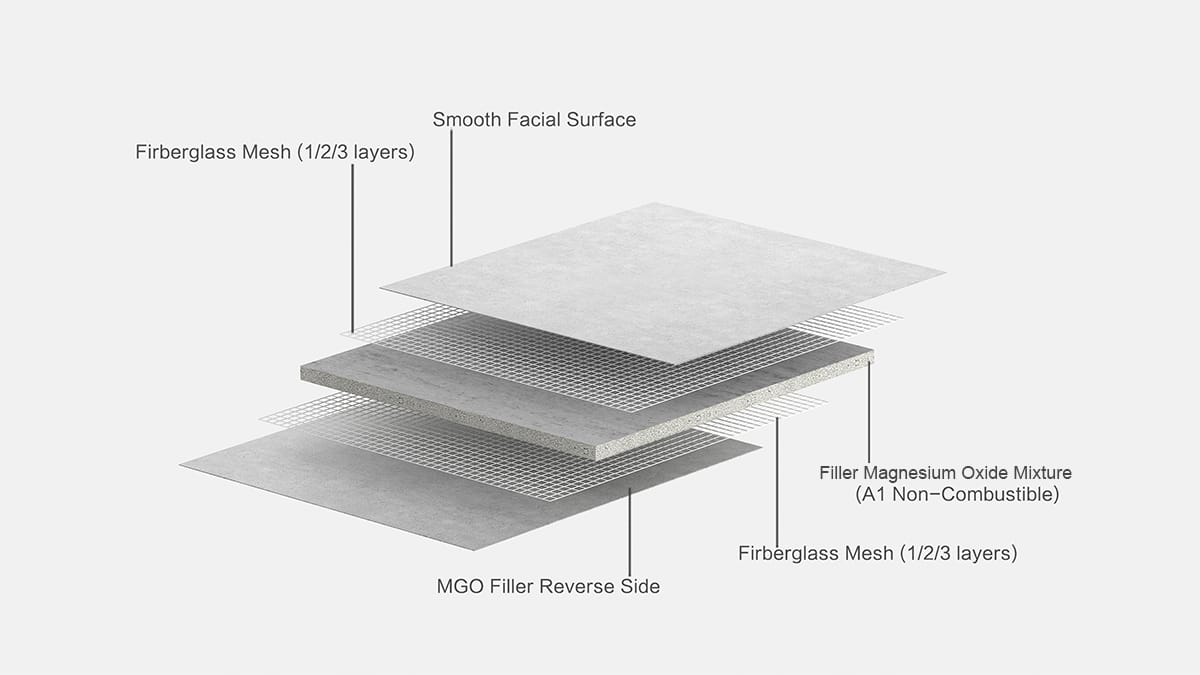
You see that MgO flooring uses a smart multi-layer design. Each layer has a job. The top layer resists wear and keeps the floor looking new. The decorative layer gives color and style. The core layer uses magnesium oxide, which adds strength and stops water from getting in. The balance paper helps the floor stay flat and stable. The backing layer supports the whole structure and makes installation easier.
Here is a simple list of the layers you find in MgO flooring:
Wear-resistant layer: Protects against scratches and stains.
Decorative layer: Adds patterns and colors.
MgO core: Gives strength and moisture resistance.
Balance paper: Keeps the floor stable.
Backing layer: Supports the floor and helps with installation.
This multi-layer setup makes the floor tough and long-lasting. You get a surface that stands up to daily use and keeps its shape in wet places.
Key Ingredients
You notice that MgO flooring uses natural and safe materials. The main ingredient is magnesium oxide. Makers add magnesium chloride, perlite, fiberglass mesh, and wood pulp. These parts work together to make the floor strong and healthy for your space.
One important feature is the use of melamine paper. This paper covers the surface and gives a smooth finish. Melamine paper does not have harmful PVC. You get a floor that is safer for you and better for the earth. The surface stays scratch-resistant and anti-slip, which means you enjoy a safe and durable floor for years.
You do not find PVC in MgO flooring. This makes it a smart choice for green building projects. The materials help keep your indoor air clean and support eco-friendly living.
Tip: If you want a floor that is safe, strong, and good for the planet, MgO flooring gives you all these benefits with its special structure and ingredients.
Key Features of MgO Flooring
Moisture and Fire Resistance
You want a floor that stands up to water and fire. MgO flooring gives you both. The material does not let water soak in easily. In laboratory tests, the water absorption rate of standard MgO boards is about 20%. This number comes from experiments where the board sits in water for 24 hours. After soaking, the board keeps almost all its strength, even after 25 cycles of getting wet and drying out. This makes it much better than plywood, which can warp or weaken when wet.
You also get top fire resistance. MgO boards hold a Class A1 fire rating, which is the highest level. They do not burn or catch fire easily. Even when exposed to high heat, they do not produce toxic smoke. You can feel safer knowing your floor helps protect your home or business.
Water absorption rate: about 20% after 24 hours
Maintains strength after repeated wetting and drying
Class A1 fire rating (highest)
Non-combustible and no toxic smoke
Tip: If you need a floor for kitchens, bathrooms, or basements, MgO flooring keeps your space dry and safe.
Durability and Safety
You want a floor that lasts. MgO flooring outperforms laminate and wood flooring in durability tests. It resists moisture better than both. It also has better fire safety ratings. The overall strength of MgO flooring means you do not have to worry about dents, scratches, or warping.
Here is a table that shows some of the safety certifications MgO flooring meets:
Test Categories and Characteristics Tested | Relevant Standards and Acceptance Criteria |
|---|---|
Structural floor and roof sheathing use | ICC-ES AC386, AC367, AC318, AC319, AC376, AC378, AC269.1 |
Wall, ceiling sheathing, floor underlayment | ASTM C473, C666, C1185, C1186, C1396, D1037, D2394 |
Physical properties and fire resistance | ASTM E84, E119, E136, ANSI A118.1, A118.4, NFPA 285, NFPA 286 |
MgO flooring also helps you create a safer indoor environment. It releases very few volatile organic compounds (VOCs). Many traditional floors give off VOCs, which can harm air quality. With MgO flooring, you get cleaner air and a healthier space.
Eco-Friendly Benefits
You care about the planet. MgO flooring supports green building. It uses fewer natural resources than many traditional floors. The boards are non-toxic and do not contain asbestos. You can recycle them, which means less waste goes to landfills.
MgO flooring helps you earn environmental credits for certifications like LEED and BREEAM. Its long life means you replace it less often, which saves resources and money. While the production of MgO can release more CO2 than some materials, using natural gas instead of coal lowers emissions by 18%. The boards are safe, recyclable, and help you meet green building standards.
Uses fewer natural resources
Non-toxic and recyclable
Long-lasting, so you replace it less often
Note: Choosing MgO flooring means you support a healthier planet and a safer home.
Easy Installation and Maintenance
You want a floor that is easy to install and care for. MgO flooring does not need sealing or refinishing like wood. You keep it looking good with simple cleaning.
Sweep the floor regularly.
Mop with a mild detergent when needed.
Keep the surface dry.
Check for damage or wear from time to time.
You do not need special tools or chemicals. The floor stays strong and clean with little effort. This saves you time and money over the years.
Callout: MgO flooring gives you a strong, safe, and easy-to-care-for surface that fits busy homes and businesses.
MgO Flooring vs. Traditional Options
Comparison with Wood and Laminate
You may wonder how MgO flooring stands up to wood and laminate. When you look at high humidity conditions, you see big differences. Wood flooring absorbs water. It can swell, warp, or even grow mold. Laminate can also get damaged by water. MgO flooring does not have these problems. It keeps its shape and strength, even in wet places.
Here is a table that shows how MgO flooring compares to wood flooring in humid conditions:
Feature | MgO Flooring | Wood Flooring |
|---|---|---|
Water Absorption | Does not absorb water | Absorbs moisture |
Mold Resistance | Impervious to mold and mildew | Susceptible to mold growth |
Structural Integrity | Maintains integrity in humid conditions | Can warp or swell in high humidity |
You get a floor that stays strong and clean. You do not have to worry about mold or swelling. This makes MgO flooring a smart choice for kitchens, bathrooms, and basements.
Tip: If you want a floor that lasts in any room, MgO flooring gives you peace of mind.
Advantages Over Vinyl and Other Materials
MgO flooring also offers clear benefits over vinyl and other synthetic floors. You get better fire safety. MgO boards are non-combustible and hold a Class A1 fire rating. They do not burn easily or give off toxic fumes. This makes them a safe pick for schools, hospitals, and tall buildings. MgO does not break down under heat. It has a zero flame spread rating, so it will not help a fire grow.
MgO flooring is made from natural minerals, not petrochemicals like vinyl.
It does not emit harmful VOCs, so your indoor air stays clean.
The strong surface means you replace it less often, which cuts down on waste.
MgO flooring does not harm forests, unlike hardwood.
The production process uses less energy and creates less waste.
You get a non-toxic, mold-resistant floor for a healthier home.
You see that MgO flooring gives you safety, strength, and a smaller impact on the planet. You make a smart, healthy choice for your space.
Applications and Practical Use
Residential and Commercial Uses
You can use mgo flooring in many places. Homeowners choose it for rooms that get wet or dirty. You often see it in kitchens, bathrooms, and basements. Builders use it in new houses and apartment buildings because it lasts a long time and keeps out water.
Here are common places where people use this flooring:
Kitchens
Bathrooms
Basements
Laundry rooms
Entryways
Businesses also pick mgo flooring for tough jobs. Hospitals need floors that do not burn and stay clean. Schools want floors that last and do not get damaged by water. Hotels use it in busy areas because it does not wear out fast. Offices like it for renovations and high-traffic spaces.
Commercial Sector | Application Reason |
|---|---|
Construction | Needs strong floors for damp places |
Public Places | Good for green building projects |
Offices | Works well in busy areas |
Tip: You can trust mgo flooring in places where safety and strength matter most.
Installation Process
You can install mgo flooring with simple steps. First, gather your tools. You need safety glasses, gloves, a utility knife, screws, and a broom. Make sure the floor is clean and flat. Remove dust and check for wet spots.
Follow these steps:
Start in a corner and leave a small gap from the wall.
Place the boards and secure them with screws spaced about 8 inches apart.
Make sure each screw sits flat with the board.
Sand the surface lightly if needed.
Apply a primer or sealant to protect the boards.
You may use a moisture barrier if the room gets wet often. Always wear safety gear when cutting or installing boards.
Maintenance Tips
You can keep your floor looking new with easy care. Sweep or vacuum often to remove dirt. Mop with mild soap and water. Dry the floor after cleaning. Check for scratches or loose boards sometimes.
Here are simple tips:
Clean spills right away.
Use mats at doors to catch dirt.
Avoid harsh chemicals.
Inspect the floor every few months.
Note: Regular cleaning helps your floor last longer and keeps your space safe.
MgO flooring is special for many reasons. This floor can last for many years. It stays strong even when it gets wet. When you pick this material, you help the earth because it uses less stuff. MgO boards are safe because they do not burn easily. They also help keep rooms quiet by blocking noise. You can put this flooring in homes or businesses and feel sure it will work well.
Good for the earth and does not harm nature much
Safe from fire and keeps noise down
Stays steady and works well for more than 33 years
If you pick MgO flooring, you get a space that is safer, better for the planet, and lasts a long time.
FAQ
What rooms work best for MgO flooring?
You can use MgO flooring in kitchens, bathrooms, basements, and laundry rooms. It handles moisture and heavy use. You get a strong floor that stays clean and safe in busy spaces.
Can you install MgO flooring by yourself?
You can install MgO flooring with basic tools. You need a utility knife, screws, and safety gear. Follow the steps in the guide. You save money and finish the job quickly.
Does MgO flooring need special cleaning?
You clean MgO flooring with a broom or mop. Use mild soap and water. Avoid harsh chemicals. You keep the surface looking new with simple care.
Is MgO flooring safe for people with allergies?
You get a floor that does not trap dust or mold. MgO flooring releases very few chemicals. You create a healthier space for people with allergies.
How long does MgO flooring last?
You can expect MgO flooring to last over 30 years. The material resists water, fire, and scratches. You get a floor that stays strong and looks good for decades.